
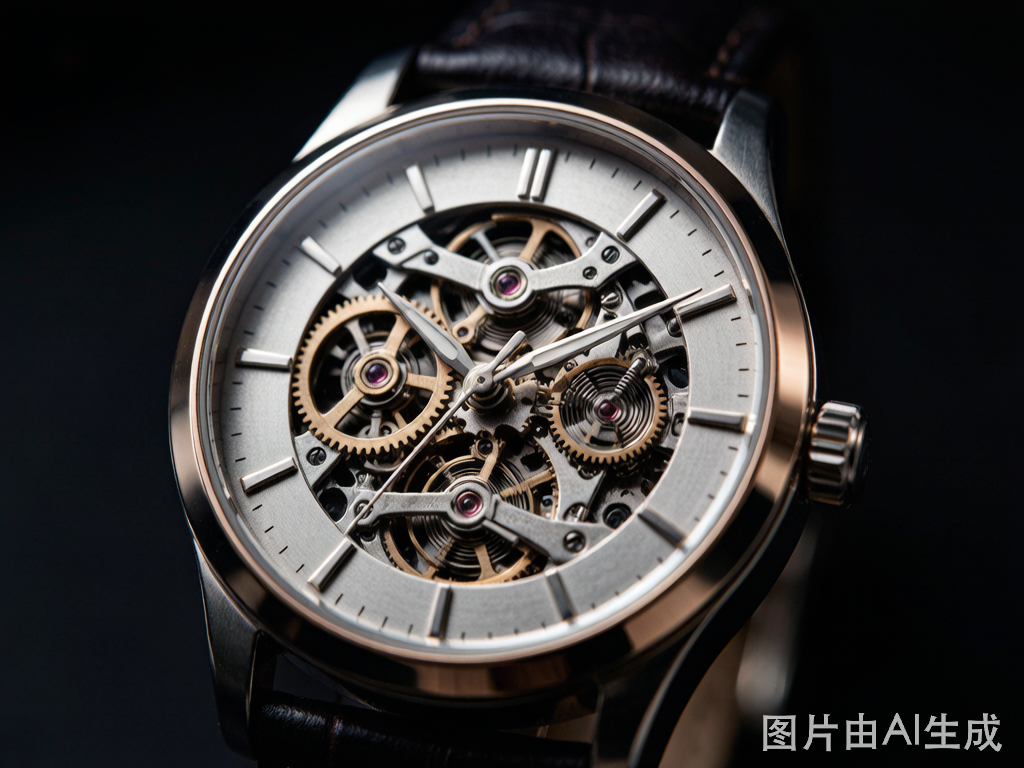
Skeleton Watches: The Complete Guide to Open-Heart and Skeleton Timepieces
Skeleton watches represent the ultimate expression of horological transparency — timepieces where the movement itself becomes the dial. By stripping away the traditional dial face and exposing the intricate gears, balance wheels, and bridges beneath, skeleton watches transform functional engineering into wearable art. In 2026, the skeleton watch category is experiencing unprecedented growth, driven by consumer demand for visible craftsmanship and the rising sophistication of Chinese watch manufacturing.
Whether you are a collector seeking your next statement piece or a B2B buyer evaluating skeleton watches for your product line, this guide covers everything you need to know — from the history and craftsmanship behind skeletonization to the practical considerations of sourcing, pricing, and selling these remarkable timepieces.
What Is a Skeleton Watch?
A skeleton watch is a timepiece where the dial and movement plates have been cut away — or “skeletonized” — to reveal the inner workings of the mechanical movement. Unlike traditional watches with solid dials that hide the movement, skeleton watches celebrate the mechanical complexity that powers them. Every gear, spring, and escapement is visible through the front and often the back of the watch.
It is important to distinguish between three related but distinct concepts:
- Full Skeleton: The entire dial is removed. The movement bridges and plates are pierced and decorated so that you can see straight through the watch. Only the hands and hour markers (often applied directly to the movement or a minimal ring) remain to indicate time.
- Open-Heart: A partial skeletonization where a small window — usually circular — is cut into the dial to reveal the beating balance wheel. This offers a taste of mechanical transparency while maintaining dial readability. Brands like Hamilton and Tissot popularized this approach.
- Semi-Skeleton: A middle ground where significant portions of the dial are cut away, but enough remains for easy time reading. Often combined with decorative bridges that frame the visible movement components.
The History and Evolution of Skeleton Watches
The art of skeletonization dates back to the 18th century, when French master watchmaker André-Charles Caron first created skeletonized clocks to attract customers to his Parisian workshop. By removing portions of the dial and movement plates, Caron allowed people to see the mechanical marvel within — a marketing strategy that proved remarkably effective.
In the 20th century, skeletonization evolved from a marketing gimmick into a respected horological art form. Pioneering houses like Vacheron Constantin and Breguet elevated skeleton watchmaking to fine art, with master engravers spending hundreds of hours hand-decorating each bridge and plate with intricate guilloché, anglage (hand-beveled edges), and perlage patterns.
The modern skeleton watch renaissance began in the early 2000s, driven by advances in CNC machining that made precise material removal economically viable. By 2026, skeleton watches are no longer exclusive to luxury maisons — Chinese manufacturers in Shenzhen and Guangzhou now produce skeleton watches at price points accessible to mainstream consumers, with quality that continues to improve year over year.
How Skeleton Watches Are Made
The manufacturing process for a skeleton watch is significantly more complex than for a standard timepiece. Here is an overview of the key steps:
1. Movement Selection and Modification
Not all movements can be skeletonized. The process requires movements with sufficient structural integrity to remain functional after material removal. Popular base movements for skeletonization include the ETA 2892, Seagull ST16/ST17, and Miyota 9015. The movement plates and bridges must be thick enough to allow material removal without compromising rigidity.
2. CNC Machining and Piercing
Modern skeletonization typically uses 5-axis CNC machines to precisely remove material from bridges and plates. The design must be carefully engineered to maintain structural integrity — remove too much material and the bridge will flex or break; remove too little and the skeleton effect is lost. A typical skeleton movement requires 4-8 hours of CNC time, compared to 30 minutes for a standard movement.
3. Hand Finishing
After CNC machining, the edges of every cut must be hand-beveled (anglage) and polished. This is where the true craftsmanship shows — a well-finished skeleton movement has mirror-polished bevels on every visible edge, catching and reflecting light beautifully. In luxury skeleton watches, this hand-finishing can take 50-200 hours per movement.
4. Assembly and Regulation
Skeleton movements are more challenging to assemble because the exposed components are more susceptible to dust and handling damage. Additionally, the removal of material can affect the movement’s timing — lighter bridges and plates change the resonance characteristics of the movement, requiring careful regulation to maintain accuracy.
Why Skeleton Watches Are Trending in 2026
The skeleton watch category is growing at an estimated 15% annually, outpacing the overall watch market growth of 7%. Several factors are driving this trend:
- Consumer desire for authenticity: In an age of mass production and digital devices, consumers increasingly value visible craftsmanship. A skeleton watch is the antithesis of the sealed, disposable smartwatch — it is a mechanical symphony you can watch in real time.
- Social media appeal: Skeleton watches are inherently photogenic. The interplay of light through exposed gears, the visual drama of a beating balance wheel, and the intricate patterns of decorated bridges make skeleton watches ideal for Instagram and TikTok content.
- Improved accessibility: Where skeleton watches once started at $5,000+, Chinese manufacturers now offer quality skeleton watches in the $50-300 wholesale range. This democratization has dramatically expanded the market.
- Watch enthusiast culture: As mechanical watches make a comeback, enthusiasts seek timepieces that showcase the mechanical artistry they appreciate. Skeleton watches are the ultimate expression of this appreciation.
Popular Skeleton Watch Styles
The Classic Dress Skeleton
Characterized by elegant, thin cases (often 38-40mm), refined hand-finishing, and minimalist aesthetics. The dial skeletonization is subtle and artistic, with flowing organic curves rather than aggressive cutouts. These watches pair well with formal attire and appeal to traditional watch enthusiasts. Think Vacheron Constantin Traditionnelle or Arnold & Son Nebula.
The Modern Sport Skeleton
Bold, angular cases (42-46mm) with aggressive skeletonization patterns. Often paired with bright accent colors, rubber straps, and sporty complications like chronographs. Brands like Hublot and Richard Mille define this category, but affordable alternatives from Chinese OEMs are increasingly available.
The Aviator Skeleton
Inspired by vintage pilot watches, these combine large, readable cases with partial skeletonization. The open-heart design is particularly popular in this category, offering a window to the movement while maintaining the instrument-panel aesthetic. Compare with business watch designs that prioritize readability.
The fastest-growing segment. Chinese manufacturers use reliable but inexpensive movements (typically Seagull or Hangzhou) with CNC skeletonization and varying levels of hand-finishing. Wholesale prices range from $30-150, with retail prices of $80-400. These watches make skeleton timepieces accessible to a mass market.
Sourcing Skeleton Watches: A B2B Guide
For wholesale buyers, skeleton watches represent a high-margin opportunity. The visual appeal of exposed movements allows for premium positioning, and the manufacturing cost differential between skeleton and standard movements is relatively modest. Here is what to consider when sourcing:
Movement Quality
The movement is the star of a skeleton watch — there is nowhere to hide mediocre finishing. Insist on movements with clean CNC cuts and at least basic edge beveling. The Seagull ST16 skeleton is the most popular Chinese skeleton movement, offering reliability and decent aesthetics at low cost. For higher-end positioning, the Hangzhou 5000 skeleton offers better finishing and a more refined appearance.
Case Construction
Skeleton watches benefit from sapphire crystals on both the front and back (front-and-back display). Mineral glass is acceptable for budget models but significantly reduces the premium feel. Cases should be stainless steel (316L minimum) — see our luxury watch materials guide for material specifications.
Hand Design
In skeleton watches, the hands are particularly important because they must be visible against the complex background of exposed movement components. Look for hands with sufficient length, contrasting colors (blue or gold hands against silver movements), and luminous fill for low-light readability.
Water Resistance
Skeleton watches typically have lower water resistance (3-5 ATM) due to the complexity of sealing skeletonized cases. For consumers who want both skeletonization and water resistance, look for models with screw-down crowns and case backs. Learn more in our waterproof watches guide.
Quality Control Checklist
- Movement stability: Skeletonized movements are more susceptible to shock damage. Test sample watches with moderate impacts to ensure the movement remains functional.
- Hand alignment: Ensure hands do not catch on exposed movement components — a common issue in poorly designed skeleton watches.
- Dust contamination: Exposed movements attract dust. Inspect samples under magnification for dust particles trapped between components.
- Finishing consistency: Check that bridge beveling and decoration are consistent across production batches. Inconsistent finishing is a red flag for quality control issues.
Pricing and Margins
Skeleton watches offer excellent margin potential for B2B buyers. Here is a rough pricing breakdown:
- Entry-level skeleton (Chinese movement, mineral glass, steel case): $30-60 wholesale, $80-200 retail
- Mid-range skeleton (Seagull movement, sapphire crystal, better finishing): $60-150 wholesale, $200-500 retail
- Premium skeleton (Swiss/Swiss-style movement, sapphire front and back, detailed hand-finishing): $150-500 wholesale, $500-2000 retail
- Luxury skeleton (Swiss movement, extensive hand-finishing, precious metals): $1000+ wholesale, $3000+ retail
The mid-range category ($60-150 wholesale) offers the best balance of quality and margin, with retail markups of 3-5x being standard. For more on watch pricing and sourcing strategies, see our wholesale watch sourcing guide.
Common Misconceptions About Skeleton Watches
- “Skeleton watches are fragile.” While it is true that skeletonized movements require more careful handling than fully cased movements, well-designed skeleton watches are perfectly suitable for daily wear. The key is choosing models with robust base movements and adequate case protection.
- “You cannot read the time on a skeleton watch.” Full skeleton watches do require more effort to read, but open-heart and semi-skeleton designs maintain excellent readability while still showcasing the movement.
- “Skeleton watches are only for luxury buyers.” The democratization of skeleton watch manufacturing means quality options exist at every price point. A $100 retail skeleton watch today offers better finishing than a $500 model from a decade ago.
- “All skeleton watches are hand-engraved.” In reality, the vast majority of modern skeleton watches use CNC-machined skeletonization. Hand-engraving is reserved for true luxury pieces ($5000+).
The Future of Skeleton Watches
Looking ahead, several trends are shaping the skeleton watch category:
- Laser skeletonization: Fiber laser cutting is enabling even more intricate and precise skeletonization patterns than CNC machining, at lower costs and faster production speeds.
- 3D-printed components: Additive manufacturing is being explored for complex bridge designs that would be impossible with subtractive machining.
- Smart skeleton watches: A emerging category that combines exposed mechanical elements with smart features — see our smart watch market guide for context on this convergence.
- Color customization: Anodized and PVD-coated skeleton bridges in blue, gold, black, and rainbow finishes are becoming increasingly popular, especially among younger consumers.
Conclusion
Skeleton watches occupy a unique position in the watch market — they are simultaneously art pieces, engineering showcases, and fashion statements. For consumers, they offer a daily reminder of the mechanical marvel on their wrist. For B2B buyers and wholesale distributors, they represent a high-margin category with strong consumer demand and improving accessibility from Chinese manufacturers.
The key to success with skeleton watches is understanding the quality spectrum: entry-level models prioritize visual impact over finishing quality, mid-range models balance both, and luxury models represent the pinnacle of hand-crafted artistry. By offering a range of skeleton watches across these tiers, you can capture consumers at every price point — from the first-time buyer attracted by the visual drama to the seasoned collector appreciating hand-beveled bridges.
As watch trends in 2026 continue to emphasize transparency and craftsmanship, skeleton watches are positioned to remain one of the most dynamic and profitable categories in the watch industry.
Related Articles
- Mechanical watch comeback — Why Mechanical Watches Are Making a Comeback: The Timeless Appeal of Automatic Timepieces
- Watch movement types — Watch Movement Types Explained: Automatic, Quartz, Solar & Hybrid Mechanisms
- Classic watches guide — Classic Watches: Why One Timepiece Can Take You From Office to Weekend to Black Tie
- Couple watches guide — Couple Watches: The Ultimate Gift Guide for Partners Who Want to Match in Style