
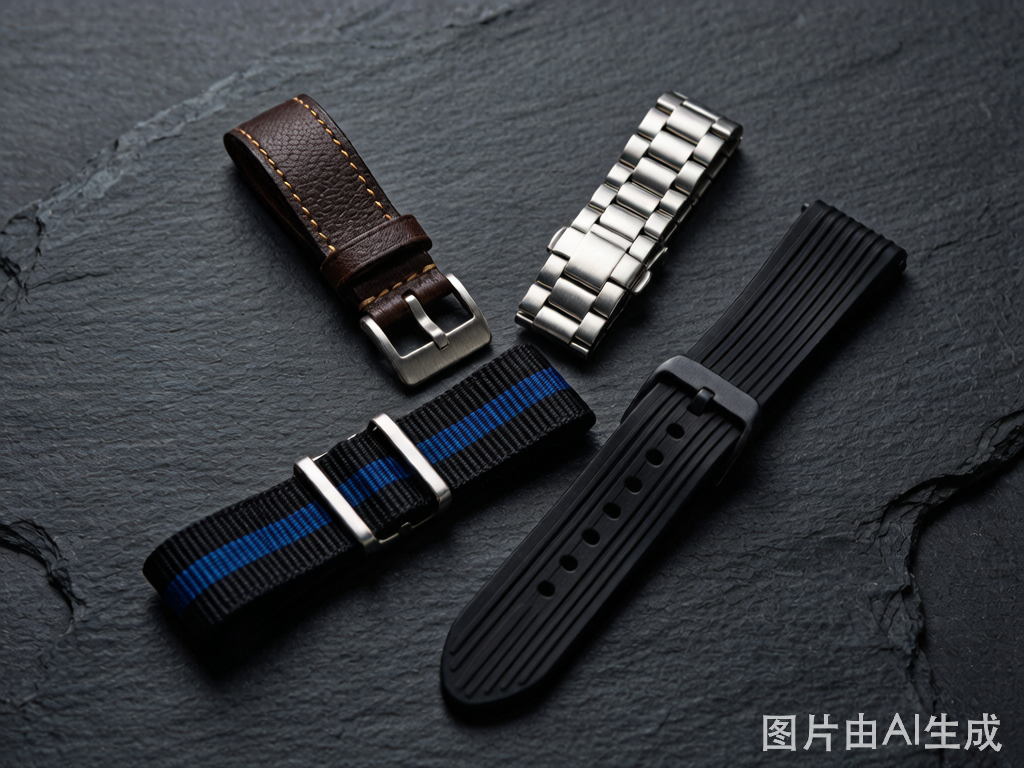
Watch Straps and Bands: The Ultimate Guide to Choosing, Changing & Sizing
The watch strap is arguably the most underrated component of a timepiece. While collectors obsess over movements, cases, and crystals, the strap — the part that actually touches your skin for hours every day — often receives minimal attention. Yet the right strap can transform a watch entirely, changing its character from sporty to elegant, from casual to formal, from ordinary to extraordinary. In this comprehensive guide, we cover every aspect of watch straps and bands, from material selection and sizing to the growing B2B market for interchangeable straps.
For consumers, understanding watch straps opens up a world of customization — one watch can become ten different timepieces with the right collection of straps. For B2B buyers and wholesale distributors, the strap market represents a high-margin, high-velocity product category that complements any watch inventory. Let us dive in.
Watch Strap Materials: A Comprehensive Breakdown
The material of a watch strap determines its comfort, durability, aesthetics, and price. Here is a detailed look at every major strap material:
Stainless Steel Bracelets
The most popular metal bracelet material, stainless steel offers excellent durability, corrosion resistance, and versatility. Most quality steel bracelets use 316L stainless steel, the same grade used in watch cases. Premium bracelets may use 904L steel (as used by Rolex) for superior corrosion resistance and luster.
Key bracelet designs include:
- Oyster bracelet: Three-piece link construction with a sporty, robust appearance. Originally designed by Rolex, this is the most popular bracelet style worldwide.
- Jubilee bracelet: Five-piece link construction offering a more dressy, refined appearance. The semi-circular links catch light beautifully.
- President bracelet: Three-piece semi-circular links with a hidden clasp. Associated with luxury dress watches.
- Engineer bracelet: Heavy, rounded links that provide exceptional comfort and a distinctive industrial aesthetic.
- Mesh/Milanese bracelet: A single piece of woven metal that is infinitely adjustable and breathable. Increasingly popular in fashion watches. Learn more about metal options in our watch materials guide.
Leather Straps
Leather remains the most versatile and emotionally appealing strap material. The type of leather, tanning process, and finishing all significantly affect quality and price:
- Full-grain leather: The highest quality, retaining the natural grain pattern. Develops a beautiful patina over time. Italian and French tanneries produce the most sought-after full-grain leathers.
- Top-grain leather: Sanded to remove imperfections, then stamped with an artificial grain. More uniform in appearance but less durable than full-grain.
- Genuine leather: The lowest quality leather category, made from the layers beneath top-grain. Often used in budget watch straps. While technically “real leather,” it lacks the durability and character of higher grades.
- Exoticic leathers: Alligator, crocodile, ostrich, and lizard leathers command premium prices. Genuine exotic leathers require CITES certification for international trade — a critical consideration for B2B buyers. Many “exotic” straps on the market use embossed cow leather to mimic exotic patterns at a fraction of the cost.
- Vegan leather: Growing in popularity, especially among younger consumers. Quality varies enormously — premium vegan leathers made from apple, pineapple, or mushroom fibers can rival genuine leather, while budget PU leather degrades quickly.
Silicone and Rubber Straps
For sports and dive watches, silicone and rubber straps are the functional choice. They are waterproof, durable, and comfortable in hot weather:
- FKM (fluoroelastomer) rubber: The premium option. FKM is highly resistant to heat, chemicals, and UV degradation. It maintains its elasticity for years and has a subtle, high-quality feel. Brands like Omega and Tudor use FKM on their dive watch straps.
- Silicone rubber: The most common material for affordable sports watch straps. Softer and more comfortable than FKM but less durable — it can attract lint and may degrade over 2-3 years of heavy use.
- TPE (Thermoplastic Elastomer): A budget alternative that mimics the feel of silicone at lower cost. Quality varies significantly between manufacturers.
- Natural rubber: Harvested from rubber trees, natural rubber offers excellent comfort and elasticity. It is hypoallergenic and has a distinctive, warm feel. However, it is more expensive than synthetic alternatives.
For dive watches, rubber and silicone straps are essential — they are the only materials that truly withstand prolonged water exposure. See our waterproof watches guide for more on water-resistant strap selection.
NATO and Fabric Straps
NATO straps have become a cultural phenomenon in the watch world. Originally developed for the British military in 1973 ( specification G10), NATO straps are single-piece nylon bands that pass under the watch case, providing security even if a spring bar fails.
Popular fabric strap types:
- NATO (G10): Single-piece nylon strap with a fixed keeper and secondary strap. Available in countless color combinations — the James Bond NATO (black/grey/navy stripes) is the most iconic.
- ZULU (NATO variant): Thicker (typically 5mm) nylon with rounded hardware. More robust than standard NATO straps.
- Tropic strap: A vintage-style rubber strap with a distinctive basketweave pattern and perforations for breathability. Originally designed for dive watches in the 1960s, now a popular retro option.
- Perlon strap: Braided plastic cord that is infinitely adjustable and extremely lightweight. Popular for summer wear.
- Canvas/Denim: Casual fabric straps that pair well with tool watches and field watches.
Understanding Watch Strap Sizing
Choosing the correct strap size is essential for both comfort and aesthetics. There are three critical measurements:
Lug Width
The lug width is the distance between the lugs (the protruding parts of the case that hold the strap). This is the most important measurement — the strap must match the lug width exactly. Common lug widths include:
- 18mm: Typically found on smaller dress watches (34-36mm case diameter)
- 20mm: The most common size, fitting watches from 38-42mm
- 22mm: Common on sport and dive watches (42-44mm case diameter)
- 24mm: Large sports watches (44mm+ case diameter)
- 26mm+: Oversized watches and some women’s models with integrated bracelets
Strap Length
Strap length must accommodate the wearer’s wrist size. Standard lengths are:
- Short (6.0-6.5 inch wrist): 110mm x 70mm (tongue x tail)
- Standard (6.5-7.5 inch wrist): 120mm x 75mm
- Long (7.5-8.5 inch wrist): 130mm x 85mm
- Extra Long (8.5+ inch wrist): 140mm x 90mm
For B2B buyers, stocking multiple lengths is important — a strap that is too short or too long will result in returns and customer dissatisfaction. The standard length covers approximately 70% of the market.
Strap Thickness
Strap thickness affects both comfort and aesthetics:
- 2-3mm: Dress watches, minimal profile
- 3-4mm: Standard for most watches
- 4-5mm: Sport and dive watches, more presence on the wrist
- 5mm+: Heavy-duty dive watches, statement pieces
Watch Strap Clasps and Buckles
The clasp is the mechanism that secures the strap on the wrist. The right clasp affects both security and comfort:
- Tang buckle (pin buckle): The simplest and most common type, similar to a belt buckle. Used on leather and fabric straps. Pros: simple, reliable, infinitely adjustable. Cons: can loosen over time.
- Deployment clasp (folding clasp): Folds closed and locks with a push-button or butterfly mechanism. Used on both metal bracelets and leather straps. Pros: secure, protects leather from bending stress. Cons: less adjustable than tang buckles.
- Butterfly clasp (deployant): A type of deployment clasp that folds symmetrically from both sides. Creates a seamless look when closed. Popular on premium leather straps.
- Diving clasp: A specialized deployment clasp with a wetsuit extension that allows the bracelet to be quickly extended for wear over a diving suit. Essential for dive watches — see our waterproof watch guide for context.
- Quick-release clasp: Features a spring-loaded mechanism that allows tool-free strap changes. Increasingly popular and a strong selling point for watches marketed to enthusiasts.
The B2B Watch Strap Market
The global watch strap market was valued at approximately USD 2.8 billion in 2025 and is projected to grow at a CAGR of 6.5% through 2030. For wholesale distributors, watch straps offer several compelling advantages:
High Margins
Watch strap manufacturing costs are low, especially for Chinese-produced straps. A silicone strap that costs $1-3 wholesale can retail for $15-30. Leather straps costing $3-8 wholesale retail for $25-60. Even premium FKM rubber straps with a wholesale cost of $5-10 can command $40-80 retail.
Repeat Purchases
Unlike watches, which are relatively infrequent purchases, straps are consumables. Watch enthusiasts typically own 5-20 straps and rotate them regularly. This creates ongoing revenue from the same customer base.
Low Inventory Risk
Straps are small, lightweight, and have no expiration date. They are easy to store and ship, with minimal risk of obsolescence. Unlike watches, which may become outdated as technology evolves, strap designs remain relevant for years.
Cross-Selling Opportunities
Every watch sale is a potential strap sale. Offering customers the option to customize their watch with different straps at the point of purchase can increase average order value by 20-40%.
How to Change a Watch Strap
One of the most appealing aspects of watch straps is how easily they can be changed. Here is a quick guide:
- Tools needed: A spring bar tool (a small forked tool available for $2-5) and a soft cloth to protect the watch case.
- Position the watch: Place the watch face-down on a soft cloth.
- Insert the tool: Place the forked end of the spring bar tool between the strap and the lug, catching the shoulder of the spring bar.
- Compress and release: Push the tool toward the strap to compress the spring bar, then lift the strap away from the case.
- Install the new strap: Insert one end of the spring bar into the lug hole, then compress the other end and seat it into the opposite lug.
- Verify security: Gently tug the strap to ensure the spring bar is properly seated.
For quick-release straps (with a small lever on the spring bar), no tools are needed — simply slide the lever to compress the spring bar and remove the strap.
Trending Strap Styles for 2026
- FKM rubber straps: The premium rubber strap category is growing rapidly as consumers recognize the quality difference between FKM and standard silicone. Watch brands that include FKM straps as standard equipment gain a competitive edge.
- Quick-release systems: Tool-free strap changes are becoming an expected feature, especially in the $100+ retail segment. Manufacturers offering quick-release spring bars as standard are winning consumer preference.
- Vintage-inspired designs: Tropic straps, beads-of-rice bracelets, and rally leather straps (with perforations) are trending alongside the broader vintage watch movement.
- Sustainable materials: Straps made from recycled ocean plastic, cork, and vegan leather are gaining traction, particularly in European markets. These command a 30-50% premium over conventional straps.
- Custom and engraved buckles: Personalized buckles with engraved initials or logos are popular for gift watches — see our couple watches gift guide for gifting context.
Sourcing Watch Straps from China
China is the world’s largest producer of watch straps, with manufacturing concentrated in Shenzhen, Guangzhou, and Zhejiang. The sourcing landscape offers options at every quality level:
- Budget silicone/rubber straps: $0.50-2.00 wholesale. Suitable for promotional items and entry-level watches.
- Mid-range leather straps: $2-8 wholesale. Genuine leather with basic stitching. Suitable for watches retailing $50-200.
- Premium leather straps: $8-25 wholesale. Full-grain leather, contrast stitching, quality hardware. Suitable for watches retailing $200-800.
- Steel bracelets: $3-15 wholesale (316L, stamped links), $15-40 (solid links, screwed construction). See our wholesale sourcing guide for supplier evaluation tips.
- FKM rubber straps: $5-12 wholesale. A premium option that justifies higher retail pricing.
When sourcing straps, always request samples before placing bulk orders. Inspect stitching quality (even, tight, no loose threads), edge finishing (painted and sealed edges on leather, clean mold lines on rubber), and hardware quality (solid stainless steel buckles, not plated zinc).
Conclusion
The watch strap is far more than an afterthought — it is a critical component that affects comfort, style, and the overall wearing experience. For consumers, understanding strap materials, sizing, and styles opens up a world of customization that can transform a single watch into a versatile collection. For B2B buyers, the strap market represents a high-margin, high-velocity category that complements any watch inventory.
Whether you are sourcing classic watches that need elegant leather straps, dive watches that require durable rubber bands, or smart watches with interchangeable bands, the strap you choose can make or break the customer experience. By offering a diverse range of high-quality straps — from budget-friendly silicone to premium FKM rubber and full-grain leather — you can serve every market segment while maximizing margins and customer satisfaction.
Related Articles
- Luxury watch materials — Luxury Watch Materials Explained: Stainless Steel, Titanium, Ceramic & Gold
- Classic watches — Classic Watches: Why One Timepiece Can Take You From Office to Weekend to Black Tie
- Business watches — Best Business Watches for Men in 2025: The Executive’s Complete Guide
- Gift watch guide — How to Choose the Perfect Graduation Gift Watch: A Complete Guide for 2025