
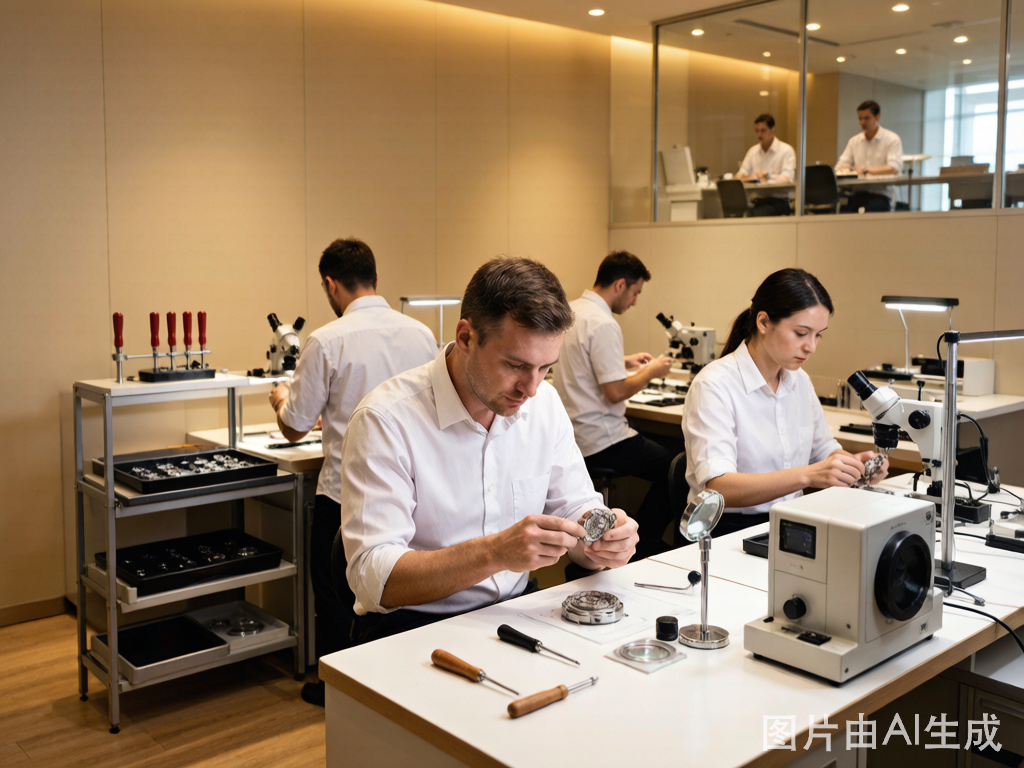
The Complete Guide to Custom Watch Manufacturing: OEM, ODM & Private Label in 2026
The global watch market is projected to reach $134 billion in 2026, and a significant portion of this growth is driven by custom and private label watches. Whether you’re an entrepreneur looking to launch your own watch brand, a corporate buyer seeking promotional timepieces, or a retailer wanting exclusive product lines, understanding the custom watch manufacturing landscape is essential for success.
In this comprehensive guide, we’ll break down everything you need to know about OEM (Original Equipment Manufacturer), ODM (Original Design Manufacturer), and private label watch manufacturing — including the key differences, cost structures, quality control processes, and how to choose the right manufacturing partner for your project.
What Is OEM Watch Manufacturing?
OEM (Original Equipment Manufacturer) refers to a manufacturing arrangement where you provide the complete design specifications — including dial artwork, case shape, movement type, and materials — and the factory produces the watches exactly to your specifications. You own the intellectual property, and the manufacturer simply executes your vision.
OEM watch manufacturing is ideal for brands that have strong in-house design capabilities and want complete control over every aspect of their product. This approach gives you maximum flexibility in choosing materials, selecting movements, and defining the overall aesthetic of your timepiece.
Key Advantages of OEM Manufacturing
- Full Design Control: Every detail from case dimensions to dial typography is yours to decide
- Brand Exclusivity: Your design cannot be sold to other clients
- Custom Movements: Option to specify automatic mechanical movements or specialized complications
- Premium Positioning: Unique designs command higher retail prices and stronger brand identity
- IP Protection: You own all design files and molds
OEM Considerations
- Higher Minimum Order Quantity (MOQ): Typically 300–1,000 units per SKU due to custom mold costs
- Longer Lead Time: 60–120 days from design approval to delivery
- Higher Unit Cost: Custom molds and tooling increase per-unit pricing
- Design Expertise Required: You need technical knowledge of watch engineering
What Is ODM Watch Manufacturing?
ODM (Original Design Manufacturer) is a manufacturing model where the factory has pre-designed watch models that you can customize with your branding. This typically involves choosing from an existing catalog of case designs, dials, and movements, then adding your logo, changing colors, and selecting strap options to create a semi-custom product.
ODM is the most popular approach for new watch brands and small-to-medium businesses because it dramatically reduces both cost and time-to-market. The factory has already invested in molds, tooling, and component sourcing, so you benefit from economies of scale without the upfront investment.
Key Advantages of ODM Manufacturing
- Low MOQ: Starting from 50–100 units per model, making it accessible for startups
- Faster Turnaround: 30–45 days from order to delivery
- Lower Unit Cost: Shared tooling costs mean more competitive pricing
- Proven Designs: Factory-tested cases and movements reduce quality risk
- Easy Customization: Logo engraving, dial printing, and packaging are straightforward
What Is Private Label Watch Manufacturing?
Private label watch manufacturing sits between OEM and ODM. In this model, the manufacturer produces a complete watch (often based on an existing design) but applies your branding exclusively — including your logo on the dial, caseback, buckle, and packaging. Unlike ODM, private label typically involves a deeper level of customization, such as unique dial colors, special dial treatments, or modified case finishes.
Private label is perfect for businesses that want a professional-looking watch with their brand identity but don’t need (or can’t justify) a fully custom OEM design. It’s widely used by corporate gift programs, fashion brands extending into accessories, and retail chains wanting store-brand watches.
OEM vs ODM vs Private Label: Side-by-Side Comparison
Choosing the right manufacturing model depends on your budget, timeline, and brand ambitions. Here’s how the three approaches compare across key factors:
- Design Freedom: OEM offers complete control, ODM uses factory designs with branding customization, Private Label offers moderate customization on proven platforms
- MOQ Range: OEM requires 300–1,000+ units; ODM starts at 50–100 units; Private Label typically 100–300 units
- Lead Time: OEM takes 60–120 days; ODM takes 30–45 days; Private Label takes 40–60 days
- Unit Cost: OEM has the highest per-unit cost due to custom tooling; ODM offers the most competitive pricing; Private Label falls in between
- Brand Exclusivity: OEM guarantees exclusive designs; ODM designs may be shared; Private Label typically offers exclusivity on customized variants
The Custom Watch Manufacturing Process
Regardless of which manufacturing model you choose, the production process follows a similar framework. Understanding each stage helps you plan timelines, manage expectations, and ensure quality at every step.
Stage 1: Consultation and Requirements
The process begins with a detailed consultation where you define your requirements: target market, price point, design preferences, movement type, materials, and quantity. A reputable manufacturer will ask detailed questions about your vision and provide recommendations based on their experience with similar projects.
Stage 2: Design and Prototyping
For OEM projects, this involves creating CAD drawings, 3D renderings, and eventually physical prototypes. ODM and private label projects typically involve selecting base models and specifying customization details. Most manufacturers provide sample prototypes (usually 2–5 units) for your approval before mass production begins.
Stage 3: Material Sourcing and Component Procurement
The manufacturer sources all components — cases (stainless steel, titanium, or alloy), dials, hands, movements, crystals, crowns, and straps. For quality watch production, reputable factories work with certified suppliers for movements (such as Miyota, Seiko, or ETA) and use genuine materials throughout.
Stage 4: Mass Production
Once the prototype is approved, production begins. This stage includes movement assembly, case assembly, dial fitting, hand setting, crystal installation, strap attachment, and final case closing. Production timelines vary from 15–45 days depending on order volume and complexity.
Stage 5: Quality Control and Testing
A thorough quality control process is non-negotiable in watch manufacturing. The best factories implement multi-stage QC: incoming material inspection, in-process quality checks, water resistance testing, timing accuracy verification, and final cosmetic inspection. Every watch should pass a 5-step QC process before packaging.
Stage 6: Packaging and Shipping
Custom packaging is a critical brand touchpoint. Options range from simple cardboard boxes to luxury wooden presentation cases with branded cushions and warranty cards. Shipping logistics should be arranged in advance, with reliable carriers like DHL, FedEx, or specialized freight forwarders for larger orders.
How to Choose a Reliable Watch Manufacturer
Selecting the right manufacturing partner is arguably the most important decision in your custom watch project. Here are the key criteria to evaluate:
Production Capabilities
Verify the factory’s production capacity, equipment, and technical expertise. Ask about their experience with similar projects, the types of movements they work with, and their ability to handle complex complications like chronographs or tourbillons.
Quality Certifications
Look for ISO 9001 certification, which demonstrates a systematic approach to quality management. For dive watches, verify ISO 6425 compliance. Request copies of certifications and ask about their defect rate and return policies.
Communication and Service
A manufacturer that responds promptly, communicates clearly in your language, and provides regular progress updates is invaluable. Good communication prevents costly misunderstandings and keeps your project on track. Look for factories that assign dedicated project managers to each order.
Pricing Transparency
Trustworthy manufacturers provide detailed, itemized quotations covering all costs: per-unit pricing, tooling fees (if applicable), sample costs, packaging, and shipping. Be wary of quotes that seem too good to be true — extremely low prices often indicate inferior materials or shortcuts in quality control.
Understanding Costs: What Goes into Custom Watch Pricing
Custom watch pricing depends on multiple factors. Here’s a breakdown of the major cost components:
- Movement: The most expensive single component. Japanese Miyota movements cost $3–15, while Swiss ETA movements range from $30–150+ per unit
- Case: Stainless steel cases cost $2–8; titanium cases $8–25; precious metal cases can exceed $100
- Dial and Hands: Custom printed dials cost $0.50–3; applied indices and hands add $1–5
- Crystal: Mineral glass $0.50–2; sapphire crystal $3–15 depending on coatings
- Strap/Bracelet: Genuine leather $1–5; stainless steel bracelet $3–12
- Tooling and Molds: OEM mold costs range from $2,000–10,000 per component (one-time cost)
- Packaging: Simple boxes $0.50–2; premium presentation cases $5–20
For a quality stainless steel watch with a Japanese automatic movement, expect total manufacturing costs (including packaging) in the range of $15–40 per unit at quantities of 500+. Retail pricing typically follows a 3–5x markup on manufacturing cost.
Common Mistakes to Avoid in Custom Watch Projects
- Skipping the Prototype Stage: Never skip samples. Physical prototypes reveal fit, finish, and sizing issues that renderings cannot show
- Ignoring Water Resistance Testing: Even fashion watches should pass basic water resistance testing — customer complaints about moisture are devastating to brand reputation
- Underestimating Lead Times: Build 2–4 weeks of buffer into your timeline for unexpected delays
- Ordering Without a Contract: Always have a written agreement covering specifications, payment terms, quality standards, and delivery dates
- Neglecting After-Sales Support: Plan for warranty service and spare parts before your first order ships
Getting Started: Your Next Steps
Ready to bring your watch vision to life? The process starts with a conversation. Prepare a brief outlining your target market, desired price point, design preferences (reference images are helpful), estimated order quantity, and timeline. A professional manufacturer will respond with recommendations, a preliminary quotation, and a proposed development schedule.
At Shantou Xingguang Trading Co., Ltd., we specialize in helping businesses of all sizes navigate the custom watch manufacturing process. With 10+ years of experience serving clients across 50+ countries, we offer flexible OEM, ODM, and private label solutions with MOQs as low as 50 units and delivery within 7 days for stock items. Contact us to discuss your custom watch project.
Leave a Reply