
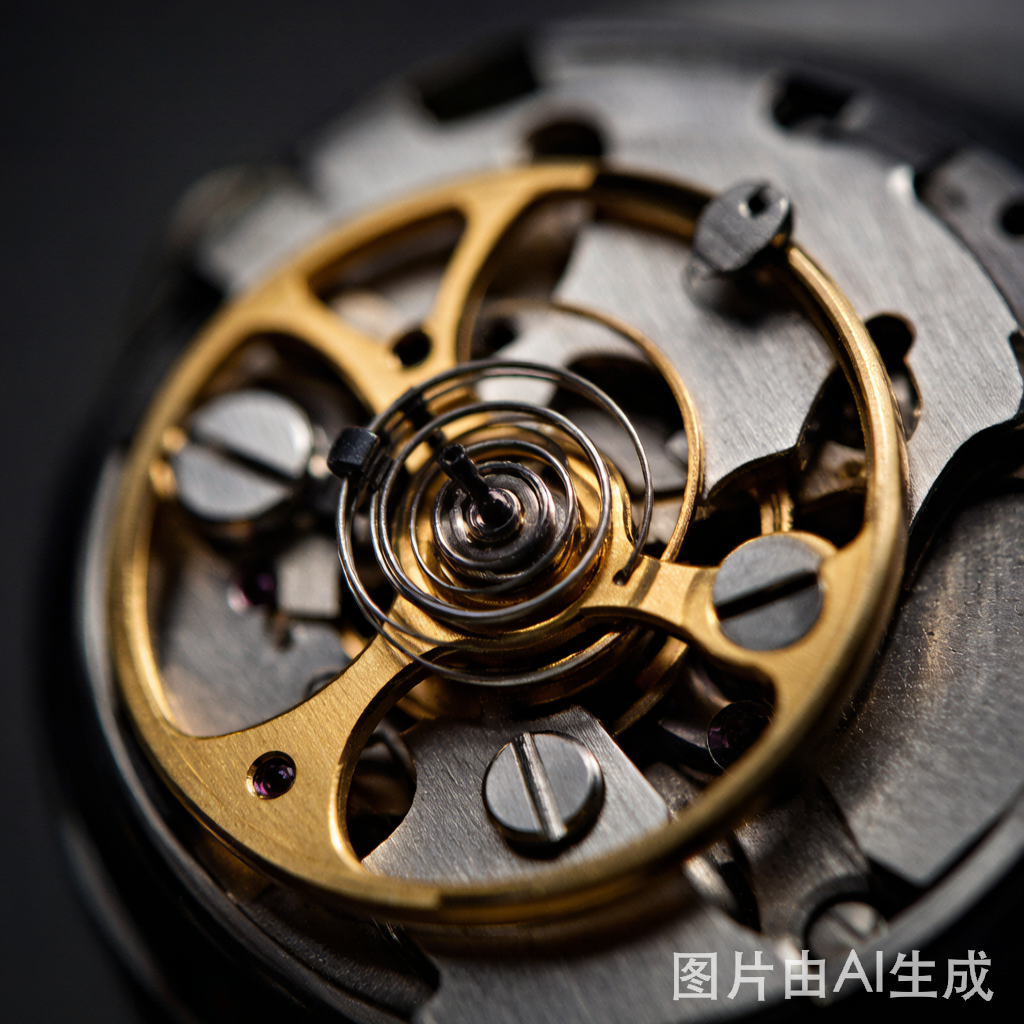
Watch Balance Wheel and Hairspring: The Heart of Mechanical Timekeeping
The balance wheel and hairspring together form the oscillating system at the core of every mechanical watch. Without this ingenious partnership, the energy stored in the mainspring barrel would discharge in a single uncontrolled burst rather than ticking away in precise, measurable increments. Understanding how the balance wheel and hairspring work is essential for anyone interested in mechanical watch movements, whether you are a collector, retailer, or wholesale buyer sourcing timepieces from manufacturers.
What Is the Balance Wheel?
The balance wheel is a small, weighted wheel that oscillates back and forth at a specific frequency. Each swing releases a tiny amount of energy from the gear train, advancing the hands by a fraction of a second. The speed of this oscillation determines the watch’s beat rate, typically measured in vibrations per hour (vph) — most commonly 21,600, 28,800, or 36,000 vph.
The balance wheel is connected to the escapement mechanism, which alternately locks and releases the gear train with each swing. The result is the familiar ticking sound of a mechanical watch. Without the balance wheel’s precise oscillation, accurate timekeeping would be impossible.
Anatomy of a Balance Wheel
A typical balance wheel consists of several components:
- Rim: The outer ring of the wheel, usually made of a temperature-compensating alloy. The rim’s mass and distribution directly affect the watch’s accuracy.
- Spokes: The arms connecting the rim to the center hub. Most balance wheels have two or three spokes.
- Hairspring attachment point: The inner end of the hairspring is pinned to the balance staff or collet, while the outer end is fixed to the balance cock.
- Timing screws: Adjustable screws on the rim that allow watchmakers to fine-tune the balance wheel’s rotational inertia. These are critical for chronometer-level accuracy.
Types of Balance Wheels
Over the centuries, watchmakers have developed several balance wheel designs, each addressing specific challenges in timekeeping accuracy.
1. Glucydur Balance Wheel
The Glucydur balance wheel, introduced in the 1950s, is made from beryllium-copper alloy (Glucydur). It is non-magnetic, resistant to temperature changes, and highly dimensionally stable. Today, most modern mechanical watches use Glucydur balance wheels. Unlike older cut bimetallic balance wheels, Glucydur does not require compensation cuts because the alloy’s properties remain stable across temperature ranges.
2. Bimetallic (Compensation) Balance Wheel
Older pocket watches and vintage wristwatches often used bimetallic balance wheels made by fusing two metals — typically brass on the outside and steel on the inside. The different expansion rates of these metals caused the rim to flex as temperatures changed, compensating for the hairspring’s temperature sensitivity. While ingenious, this design was rendered obsolete by modern Nivarox and silicon hairsprings that are inherently temperature-stable.
3. Free-Sprung Balance Wheel
In a free-sprung balance system, there is no regulator index. Instead, the rate is adjusted by adding or removing tiny timing weights or screws on the balance wheel rim. This design eliminates the friction and instability of the regulator, resulting in superior positional accuracy. The free-sprung balance is used in high-end movements from brands like Rolex, Patek Philippe, and Omega, and is a hallmark of chronometer-certified timepieces.
4. Screwed Balance Wheel
Some balance wheels feature gold or brass timing screws around the rim. By turning these screws in or out, a watchmaker can adjust the effective radius of the mass distribution, fine-tuning the oscillation rate. While less common in mass-produced movements, screwed balance wheels remain a signature of fine watchmaking.
What Is the Hairspring (Balance Spring)?
The hairspring, also called the balance spring, is the ultra-thin spiral spring attached to the balance wheel. It is the component that determines the oscillation frequency of the balance wheel, making it the single most critical element for accurate timekeeping. The hairspring’s elasticity causes the balance wheel to return to its equilibrium position after each swing, creating the oscillation that powers the watch.
The properties of the hairspring — its thickness, length, coil geometry, and material — directly determine the watch’s accuracy. Even a microscopic change in the hairspring’s dimensions can result in seconds of daily deviation. This is why hairspring manufacturing is considered one of the most challenging aspects of horology, with only a handful of companies worldwide capable of producing them to specification.
Types of Hairsprings
Flat Hairspring
The flat hairspring is the most common type, used in the vast majority of mechanical watches. Its spiral coils lie flat in a single plane. While simple and cost-effective, flat hairsprings can develop slight positional errors due to the asymmetry of the coil as it expands and contracts.
Breguet Overcoil Hairspring
Invented by Abraham-Louis Breguet in 1795, the Breguet overcoil (or Breguet balance spring) features an elevated outer coil that curves upward and inward. This design ensures that the hairspring breathes concentrically — expanding and contracting uniformly around its center — which significantly improves positional accuracy. The Breguet overcoil is used in premium movements and is considered a hallmark of high-end watchmaking.
Silicon (Silinvar) Hairspring
Silicon hairsprings, introduced in the early 2000s, represent a major breakthrough in horology. Silicon is non-magnetic, immune to temperature fluctuations, and does not require lubrication. Brands like Patek Philippe (Spiromax), Rolex (Syloxi), and Omega (Si14) have developed proprietary silicon hairsprings. The silicon hairspring’s key advantages include perfect concentric breathing, resistance to magnetic fields, and long-term dimensional stability.
How the Balance Wheel and Hairspring Work Together
The balance wheel and hairspring form a harmonic oscillator. Here is how the system works step by step:
- The mainspring stores energy and transmits it through the gear train to the escapement.
- The escapement releases a small pulse of energy to the balance wheel with each swing.
- The balance wheel begins to rotate, winding the hairspring.
- The hairspring’s elasticity slows the wheel and reverses its direction.
- The balance wheel swings back through its center position, passing the jeweled bearings of the pallet fork.
- The escapement releases another pulse, and the cycle repeats.
This oscillation continues as long as the mainspring has energy. The frequency of oscillation — typically 4 to 8 beats per second — determines how smoothly the seconds hand sweeps around the dial. Higher frequencies, such as 36,000 vph, produce a smoother sweep but consume more power.
Factors Affecting Balance Wheel Accuracy
Temperature
Temperature changes affect both the balance wheel’s dimensions and the hairspring’s elasticity. Modern Glucydur balance wheels and Nivarox or silicon hairsprings are engineered to minimize these effects. The METAS Master Chronometer standard tests watches at multiple temperatures to ensure accuracy across a wide range.
Magnetism
Magnetic fields can distort the hairspring, causing it to stick together or change its effective length. This results in dramatic rate changes. Silicon hairsprings and anti-magnetic casework (such as soft iron Faraday cages) help protect the oscillating system. Modern silicon hairsprings can withstand fields exceeding 15,000 gauss.
Shock
Sudden impacts can deform the balance staff or displace the hairspring. Anti-shock systems like Incabloc and KIF protect the balance staff pivots by allowing them to shift within jeweled settings rather than snapping under impact.
Position (Gravity)
Gravity affects the balance wheel differently depending on the watch’s position — dial up, dial down, crown up, crown down, etc. The balance wheel’s center of mass, the hairspring’s breathing pattern, and the friction on the jeweled bearings all vary by position. High-quality movements are adjusted to 5 or 6 positions to minimize positional error, a requirement for COSC chronometer certification.
The Balance Wheel in Modern Watch Manufacturing
For manufacturers and wholesale buyers, the balance wheel and hairspring represent one of the most critical quality differentiators. Movements using Glucydur balance wheels with Nivarox hairsprings offer excellent performance at reasonable cost, while free-sprung balances with silicon hairsprings command premium pricing.
When sourcing watches from manufacturing hubs in China, buyers should understand that the balance wheel and hairspring are typically supplied by specialized component manufacturers rather than produced in-house. Leading movement manufacturers like ETA and Sellita use standardized balance systems, while Asian manufacturers like Miyota and Seiko have their own designs. The choice of balance system directly impacts the watch’s accuracy, serviceability, and perceived value.
Conclusion
The balance wheel and hairspring are the beating heart of every mechanical watch. From the classic Glucydur wheel with a Nivarox hairspring to the cutting-edge silicon overcoil in free-sprung configurations, this oscillating system represents the pinnacle of precision engineering. Whether you are a collector appreciating the artistry or a wholesale buyer evaluating quality control standards, understanding the balance wheel and hairspring is fundamental to understanding mechanical horology.
For more information on watch components and manufacturing, explore our guides on watch frequency and beat rate, escapement types, and shock absorption systems.
Leave a Reply