
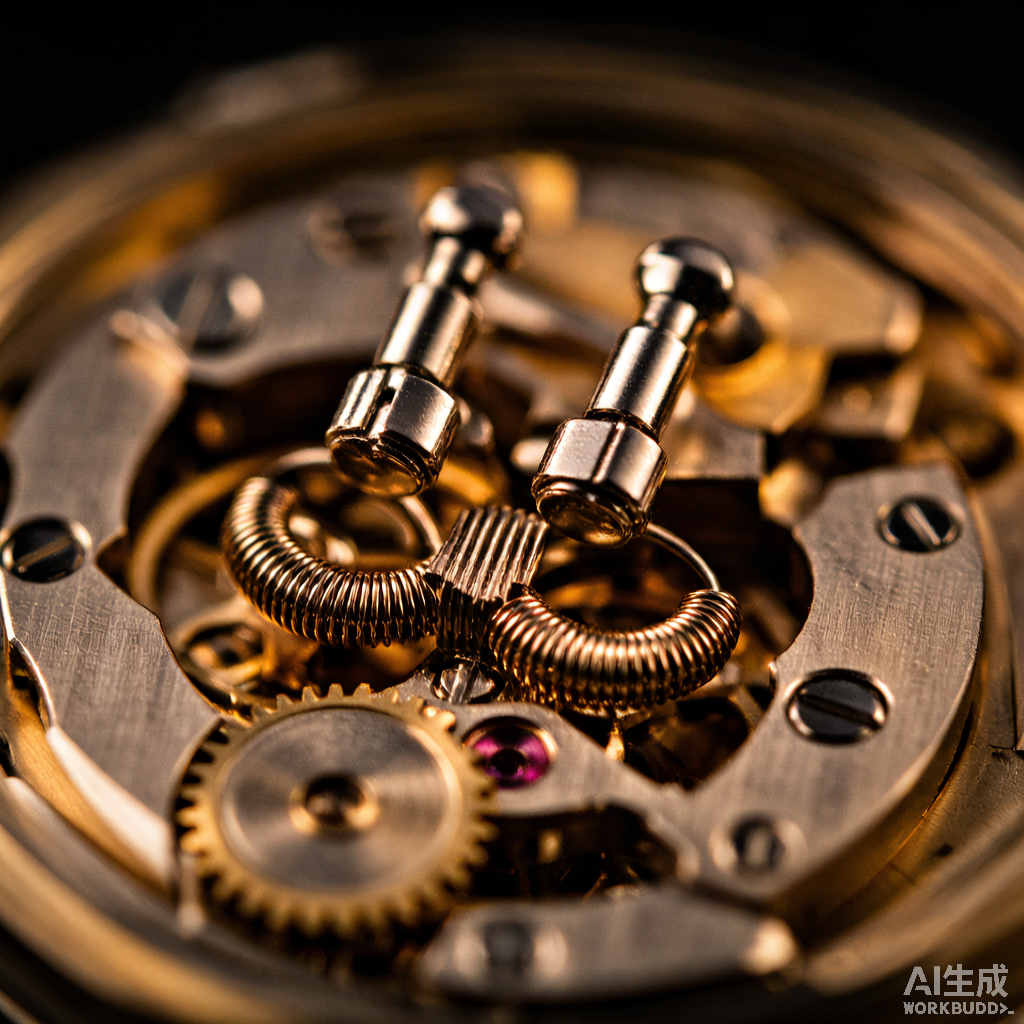
Watch Minute Repeater and Alarm Complications: Complete Guide to Sound-Producing Timepieces
In the world of haute horology, few complications command as much reverence as the minute repeater — a mechanism that chimes the time on demand with musical precision. Alongside minute repeaters, alarm watches represent another category of sound-producing timepieces with deep historical roots. Both complications transform the silent ticking of a mechanical movement into audible timekeeping, serving practical purposes in the era before electric lighting and remaining among the most prized achievements of watchmaking today.
What Is a Minute Repeater?
A minute repeater is a complication that chimes the current time when activated by a pusher or slide on the case. The mechanism uses two small hammers striking two gongs (or bells) to produce distinct tones. The chiming sequence works as follows:
- Hours: A low-pitched tone chimes the number of hours since 12 o’clock (e.g., three chimes for 3:00, 10:30, or 3:45).
- Quarter hours: A double-tone (high-low-high-low) chimes the number of quarter hours past the hour (e.g., two double-tones for 3:30).
- Minutes: A high-pitched tone chimes the number of minutes past the last quarter (e.g., seven high chimes for 3:37).
By counting the chimes, the wearer can determine the exact time in complete darkness — an invaluable feature before the invention of luminescent dials and electric lights.
The History of Repeating Watches
Repeating watches were invented in the late 17th century, predating the minute repeater. Early quarter repeaters chimed only the nearest quarter hour. The minute repeater, which chimes to the exact minute, was patented in 1750 by Thomas Mudge in England.
Before electric lighting, knowing the time in the dark was a genuine challenge. Repeating watches allowed their owners to check the time without lighting a candle or lamp — useful for anyone who needed to wake at a specific hour or time an event in darkness. The complication was particularly valued by the blind, who could “hear” the time.
As luminescent technology improved and electric lights became ubiquitous, the practical need for repeating watches faded. However, the minute repeater survived as the ultimate expression of watchmaking artistry — a complication so complex that only a handful of manufacturers can produce them.
How Minute Repeaters Work
The minute repeater mechanism is one of the most complex in all of watchmaking, consisting of over 100 additional parts beyond the base movement. Here is how the system operates:
1. Activation
The wearer activates the repeater by sliding a lever (called a repeater slide) on the case side. This winds a small mainspring dedicated to the repeater mechanism and sets the chiming sequence in motion. The slide must be pushed fully to wind enough energy for the complete chime sequence.
2. Rack and Snail Mechanism
The core of the repeater is the rack-and-snail mechanism. Three concentric snails (spiral cams) are attached to the hour, quarter, and minute wheels of the movement:
- Hour snail: A 12-step cam that determines the number of hour chimes.
- Quarter snail: A 4-step cam that determines the number of quarter-hour chimes.
- Minute snail: A 14-step cam (0-13 minutes past the quarter) that determines the number of minute chimes.
When the repeater is activated, racks (toothed levers) drop onto the snails at positions determined by the current time. The depth of each rack’s fall determines how many teeth are exposed, which in turn determines how many times the hammers strike.
3. Hammer and Gong System
The hammers are small weighted levers that strike gongs — thin wire rings coiled around the movement. Two gongs of different diameters produce the low and high tones. The hammers are released by a rack-and-detent mechanism that releases one hammer per tooth on the rack.
The gongs in modern minute repeaters are typically made of a specialized steel alloy and are hand-tuned to produce specific musical notes. The quality of the chime — its tone, sustain, and richness — is a major differentiator between repeaters and is evaluated by ear, not by machine.
4. Speed Governor
Without a speed governor, the repeater mechanism would unwind and chime all the notes in a fraction of a second. A centrifugal governor (also called a flying governor or air brake) regulates the speed of the chiming sequence to a pleasant pace. The governor consists of weighted arms that fly outward as they rotate, creating air resistance that limits the speed.
Types of Repeating Complications
Hour Repeater
The simplest repeating complication, chiming only the hours. Rare in modern watches but historically common in pocket watches.
Quarter Repeater
Chimes the hours and the nearest quarter hour. Simpler and less expensive than a minute repeater, but less precise.
Five-Minute Repeater
Chimes the hours and the number of five-minute intervals past the hour. Common in 19th-century pocket watches and some modern reissues.
Minute Repeater
The most precise repeating complication, chiming hours, quarters, and minutes. The standard for high-end repeating watches.
Grande Sonnerie
The grande sonnerie (“grand strike”) automatically chimes the hours and quarters every hour and quarter-hour, in addition to offering on-demand repetition. It can also be set to strike only on the hour (petite sonnerie) or silenced entirely. The grande sonnerie is one of the most complex watch complications ever created, rivaling the tourbillon in prestige.
Westminster Minute Repeater
Named after the Westminster Quarters melody played by the Big Ben clock, this repeater uses four hammers and four gongs to play the famous melody for each quarter. The Westminster repeater is significantly more complex than a standard two-gong repeater and is produced by only a few manufacturers.
Alarm Watches: Sound on Schedule
While minute repeaters chime the current time, alarm watches produce a sound at a preset time. The alarm complication has a separate gear train and mainspring dedicated to driving the alarm hammer.
The Vulcain Cricket
The most famous alarm watch is the Vulcain Cricket, introduced in 1947. The Cricket’s alarm mechanism uses a separate barrel that drives a hammer striking a membrane (a thin resonant disc) rather than a gong. The result is a piercing, cricket-like chirp — hence the name. The Cricket was famously worn by U.S. Presidents from Truman to George W. Bush, earning it the nickname “the President’s watch.”
The Jaeger-LeCoultre Memovox
Introduced in 1950, the Jaeger-LeCoultre Memovox (“voice of memory”) is the other iconic alarm watch. The Memovox uses a hammer striking a gong attached to the case interior, producing a resonant ringing sound. The Memovox was available in both manual and automatic versions, and the Memovox Deep Sea was one of the first dive watches with an alarm — useful for timing decompression stops.
How Alarm Watches Work
An alarm movement has two independent gear trains: one for timekeeping and one for the alarm. The alarm train is wound separately (either by the same crown or a separate one) and releases its energy at a preset time. A hammer strikes a gong or membrane, producing the alarm sound for 10-20 seconds.
The alarm time is set by rotating a separate alarm hand on the dial (typically a fourth center hand or a sub-dial hand). When the hour hand aligns with the alarm hand, a release mechanism triggers the alarm train. The mechanism is surprisingly similar to the calendar complication in its use of alignment-triggered release.
The Sound of Quality
The acoustic quality of a minute repeater or alarm is judged by several criteria:
- Tone: The pitch and timbre of the chime. Deeper, richer tones are generally preferred.
- Sustain: How long the note rings after the hammer strikes. Longer sustain indicates better gong design.
- Volume: The loudness of the chime. Repeaters must be audible but not jarring.
- Clarity: The ability to distinguish individual notes in rapid sequences.
- Casing resonance: How well the watch case amplifies and colors the gong sound. Titanium cases tend to produce brighter, louder chimes, while gold cases produce warmer, softer tones.
Manufacturers of high-end repeaters employ acoustic engineers who hand-tune each gong and personally listen to every completed repeater before it leaves the factory. This human element is one reason minute repeaters command prices from $50,000 to over $500,000.
Sound Complications and the Modern Market
For wholesale buyers and private label brands, sound complications represent an interesting market opportunity. While true minute repeaters are beyond the reach of most brands (requiring specialized watchmakers and hundreds of hours of assembly), alarm complications are more accessible. Movement manufacturers like Citizen/Miyota and Seiko produce alarm movements that can be incorporated into custom watch designs.
When sourcing sound-complication watches, buyers should consider:
- Movement availability: Alarm movements are available from several manufacturers; minute repeater movements are extremely rare.
- Case design requirements: Sound complications require specific case designs that allow sound to escape. Solid metal cases muffle the chime.
- Quality verification: Every unit should be tested for alarm/repeater function, not just movement accuracy.
- Price positioning: Alarm watches can be positioned in the mid-luxury segment, while repeaters are firmly ultra-luxury.
Conclusion
Minute repeaters and alarm watches represent the audible dimension of horology — where timekeeping becomes music. From the intricate rack-and-snail mechanism of a grande sonnerie to the practical alarm of a Memovox, sound complications demonstrate the extraordinary creativity and engineering skill of watchmakers. Whether you are a collector marveling at the craftsmanship or a buyer exploring product opportunities, understanding these complications deepens appreciation for the art of mechanical timekeeping.
Explore more watch complications in our guides on calendar complications, tourbillon watches, chronographs, and power reserve indicators.
Leave a Reply