
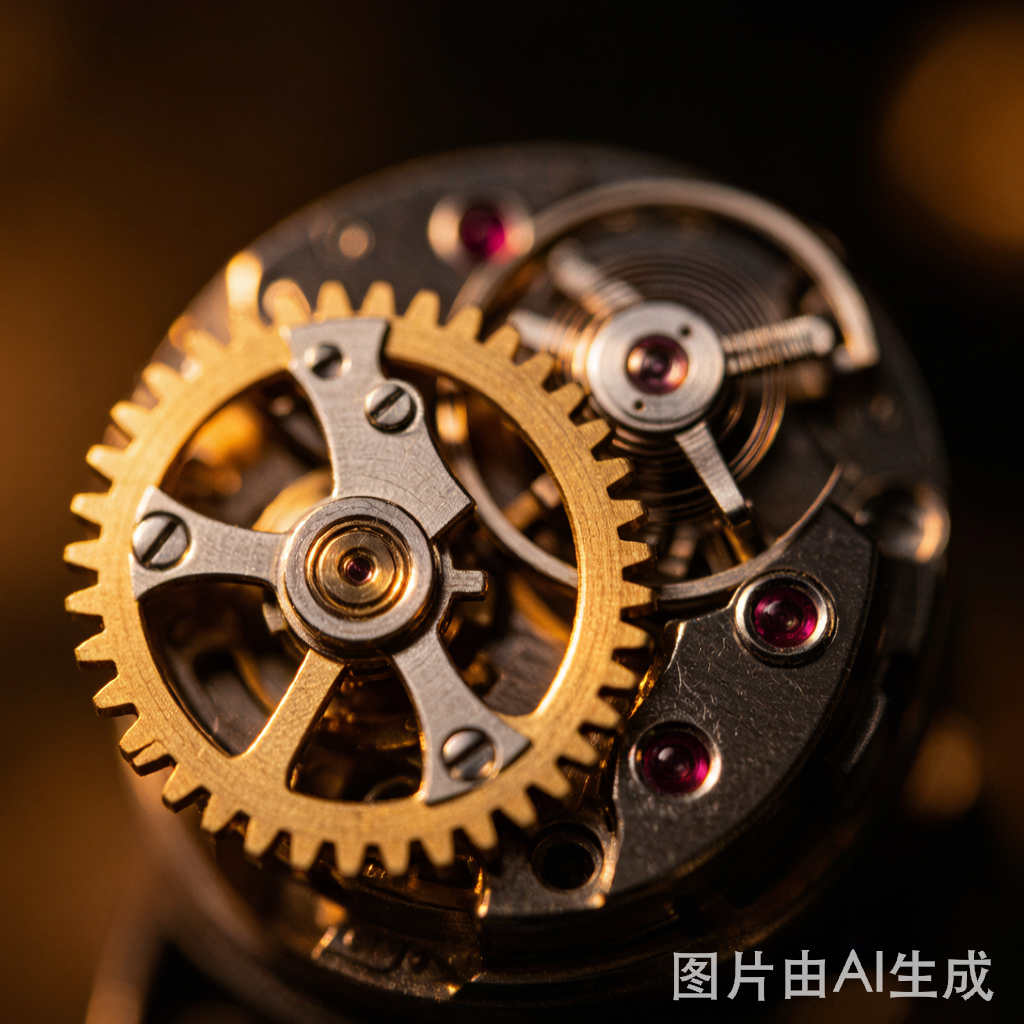
Watch Escapement Types: Lever, Co-Axial, Detent and Free Escapements Explained
The escapement is the regulatory heart of every mechanical watch. It is the mechanism that converts the unwinding force of the mainspring into precise, evenly spaced ticks that move the hands forward. Understanding watch escapement types is essential for anyone serious about horology, whether you are a collector, a watchmaker, or a B2B buyer sourcing timepieces. This comprehensive guide covers the major escapement designs — the lever escapement, co-axial escapement, detent escapement, and free escapement — their history, mechanics, advantages, and industry applications.
For foundational knowledge, see our guides on mechanical vs quartz movements, watch movement types, and watch frequency and beat rate. If you are new to watch manufacturing, our custom watch manufacturing guide provides essential context.
What Is a Watch Escapement?
The escapement serves two critical functions in a mechanical watch movement. First, it distributes energy from the mainspring to the oscillating balance wheel in controlled impulses, maintaining the balance wheel’s oscillation. Second, it locks and unlocks the gear train at precise intervals, converting the balance wheel’s oscillations into forward motion of the hands. Without an escapement, the mainspring would unwind in seconds rather than over hours or days.
The escapement consists of several key components: the escape wheel (a specialized gear with uniquely shaped teeth), the pallet fork (or lever), and the balance wheel with its hairspring. The interaction between these components determines the watch’s accuracy, efficiency, and longevity. For a deeper understanding of these components, see our guides on movement decoration techniques and shock absorption systems.
The Efficiency Problem
Every time the escapement transmits an impulse to the balance wheel, some energy is lost. Traditional lever escapements lose approximately 60-70% of the mainspring’s energy through friction between the escape wheel teeth and the pallet stones. This inefficiency means that much of the mainspring’s power is wasted, limiting the power reserve and requiring larger mainsprings. Improving escapement efficiency is one of the greatest challenges in horology.
The Lever Escapement (Swiss Lever Escapement)
The lever escapement, specifically the Swiss lever escapement, is by far the most widely used escapement in mechanical watches today. Invented by Thomas Mudge in 1755 and refined over subsequent decades, it accounts for over 95% of all mechanical watch movements produced worldwide. Its dominance is due to its reliability, self-starting capability, and ease of manufacturing.
How the Swiss Lever Escapement Works
The Swiss lever escapement operates through a precise sequence of movements:
- The balance wheel oscillates back and forth, driven by the hairspring
- The pallet fork (lever) alternately locks and unlocks the escape wheel
- As the escape wheel unlocks, it receives an impulse from the mainspring via the gear train
- The pallet fork transmits this impulse to the balance wheel via the impulse pin
- The balance wheel swings forward, and the cycle repeats in reverse
This cycle occurs 6 to 10 times per second, depending on the movement’s beat rate — typically 21,600, 28,800, or 36,000 vibrations per hour (vph). Each vibration advances the seconds hand by a tiny increment, creating the characteristic sweeping motion of mechanical watch hands.
Advantages of the Lever Escapement
- Self-starting: If the balance wheel stops, a small impulse will restart it automatically
- Reliability: Robust design that can withstand shocks and everyday wear
- Manufacturing maturity: Over 250 years of refinement means the design is well understood and cost-effective to produce
- Compatibility: Works with both manual and automatic winding systems
- Serviceability: Watchmakers worldwide are trained to service lever escapements
Disadvantages of the Lever Escapement
- Low efficiency: Only 30-40% of the mainspring energy reaches the balance wheel
- Lubrication dependency: The sliding friction between pallet stones and escape wheel teeth requires regular lubrication
- Oil degradation: Over time, lubricant ages and changes viscosity, affecting timekeeping accuracy
- Slide friction: The sliding action causes wear on the pallet jewels and escape wheel teeth
Lever Escapement in Modern Movements
The Swiss lever escapement is used in virtually all mass-produced mechanical movements, including the ETA 2824-2, Sellita SW200, Miyota 9015, and Seiko NH35. Even high-end movements from Rolex, Omega, Patek Philippe, and other luxury brands use variations of the lever escapement, often with refinements like improved geometry or specialized lubricants.
The Co-Axial Escapement
The co-axial escapement is the most significant horological innovation of the modern era. Invented by British master watchmaker George Daniels in the 1970s and commercialized by Omega starting in 1999, the co-axial escapement addresses the fundamental efficiency problem of the lever escapement by replacing sliding friction with rolling friction.
How the Co-Axial Escapement Works
The co-axial escapement uses a differently shaped escape wheel with two levels of teeth — an upper level and a lower level — arranged coaxially on the same axis. The pallet fork has three pallet stones instead of two. This design allows the impulse to be transmitted through a rolling contact rather than a sliding contact:
- Locking phase: A pallet stone locks the escape wheel, similar to the lever escapement
- Impulse phase: Instead of sliding along the tooth face, the escape wheel tooth rolls off the pallet stone, transmitting energy with minimal friction
- Unlocking phase: The escape wheel advances by one tooth, and the cycle repeats
Advantages of the Co-Axial Escapement
- Higher efficiency: Approximately 50% more efficient than the lever escapement, delivering more energy to the balance wheel
- Reduced lubrication needs: The rolling contact requires far less lubricant, and the lubricant that is used degrades much more slowly
- Longer service intervals: Omega recommends 8-10 year service intervals for co-axial movements, compared to 3-5 years for traditional lever escapements
- Improved chronometric performance: More consistent impulse delivery leads to better timekeeping stability
Challenges of the Co-Axial Escapement
- Manufacturing complexity: The multi-level escape wheel and three-pallet fork require extremely precise manufacturing tolerances
- Higher cost: The additional complexity increases production cost significantly
- Limited adoption: The design is patented and primarily used by Omega and its sister brands within the Swatch Group
- Service requirements: Requires specialized training; not all watchmakers are qualified to service co-axial movements
Co-Axial Escapement Evolution
Omega has continuously refined the co-axial escapement since its introduction. The first generation (Caliber 2500) was based on an ETA 2892 modified with the co-axial module. Subsequent generations (Caliber 8500/8501 and later) were designed from the ground up to incorporate the co-axial escapement, with optimized gear train geometry and improved balance wheel design. Modern co-axial movements also incorporate silicon components for enhanced anti-magnetic properties.
The Detent Escapement
The detent escapement is a historical design that was widely used in marine chronometers and precision pocket watches from the 18th through early 20th centuries. Unlike the lever escapement, which uses a pallet fork to alternately lock and unlock the escape wheel, the detent escapement uses a single detent blade that acts directly between the escape wheel and the balance wheel.
How the Detent Escapement Works
The detent escapement has only two components in the escapement system: the escape wheel and the detent (a thin, spring-loaded blade). The balance wheel interacts directly with the escape wheel:
- Impulse phase: As the balance wheel swings, a ruby impulse pin on the balance roller engages a tooth on the escape wheel, receiving an impulse
- Locking phase: After the impulse, the detent blade drops into position, locking the escape wheel
- Unlocking phase: On the return swing, a gold spring on the balance roller lifts the detent, allowing the escape wheel to advance by one tooth
Advantages of the Detent Escapement
- Exceptional efficiency: Because there is no pallet fork, there is minimal friction loss during impulse transmission
- Superior accuracy: Marine chronometers with detent escapements achieved accuracy of within 1-2 seconds per day, remarkable for the era
- No sliding friction: The impulse is delivered through a direct, rolling contact
Disadvantages of the Detent Escapement
- Not self-starting: If the balance wheel stops, a physical impulse is required to restart it — the detent does not automatically restart the oscillation
- Sensitivity to shock: The thin detent blade is fragile and can be damaged by impacts, making it unsuitable for dive watches or sports watches
- Position sensitivity: Performance varies depending on the watch’s position (dial up, dial down, etc.)
- Manufacturing difficulty: The detent blade requires extremely precise adjustment
Modern Detent Escapement Revival
Several luxury brands have revived the detent escapement in recent years. Urban Jurgensen & Sonner has developed a modern detent escapement with a shock-protection mechanism, and other haute horlogerie brands have created limited-edition timepieces featuring detent escapements. These watches represent the pinnacle of horological craftsmanship and are produced in very small numbers.
The Free Escapement (Glashütte Three-Quarter Plate)
The term free escapement refers to a category of escapement designs where the balance wheel is “free” — meaning it oscillates largely independently of the escapement mechanism during most of its swing. The Swiss lever escapement is technically a free escapement, but the term is often used specifically to describe certain German and Swiss designs that emphasize this independence.
The Glashütte Lever Escapement
German watchmakers in Glashütte developed their own variation of the lever escapement, often used in conjunction with the distinctive three-quarter plate movement architecture. The Glashütte approach emphasizes robustness and precision, with slightly different geometry than the Swiss lever escapement. Brands like A. Lange & Sohne, Glashütte Original, and Nomos use this approach.
Dead-Beat Seconds (Jumping Seconds) Escapement
A specialized escapement variation is the dead-beat seconds or jumping seconds complication, where the seconds hand advances in discrete one-second jumps rather than sweeping continuously. This requires an additional mechanism — typically a star wheel and jumper spring — that intercepts the seconds wheel. While not a separate escapement type per se, it modifies the escapement’s output to create the visual effect of a quartz-like ticking seconds hand on a mechanical movement.
Other Notable Escapement Designs
The Cylinder Escapement
The cylinder escapement, invented by George Graham in 1725, was widely used in 18th and 19th century watches. In this design, the balance wheel staff is hollow, and the escape wheel teeth interact directly with the cylinder. While more efficient than the verge escapement it replaced, the cylinder escapement suffered from rapid wear and required frequent maintenance. It is now obsolete in modern watchmaking.
The Virgule (Verge) Escapement
The verge escapement is the oldest known mechanical escapement, dating back to the 13th century. It uses a crown (verge) wheel with teeth perpendicular to the axis, interacting with pallets on a vertical staff. The verge escapement was used in early tower clocks and pocket watches but was replaced by more accurate designs. It is of purely historical interest today.
The Constant Force Escapement
The constant force escapement is a modern innovation that aims to deliver a perfectly consistent impulse to the balance wheel regardless of the mainspring’s state of wind. Traditional escapements deliver varying impulse force as the mainspring unwinds, leading to isochronism errors. Girard-Perregaux introduced a commercial constant force escapement in 2013, using a buckled silicon blade to store and release energy in consistent increments. This technology remains experimental and exclusive to ultra-high-end watches.
The Audemars Piguet APRP Escapement
Audemars Piguet, through its sister company Audemars Piguet Renaud et Papi (APRP), has developed several experimental escapements, including a direct-impulse escapement that eliminates the need for lubrication. These designs are used in limited-production haute horlogerie pieces and represent the cutting edge of escapement research.
Escapement Materials: The Silicon Revolution
One of the most significant developments in escapement technology is the use of silicon (also called silicium) for escapement components. Silicon offers several advantages over traditional materials:
Advantages of Silicon Escapement Components
- Anti-magnetic: Silicon is completely immune to magnetic fields, eliminating the need for Faraday cage protection
- No lubrication needed: Silicon components have extremely low friction and do not require oil
- Lighter weight: Silicon escapement components are significantly lighter than metal equivalents, reducing inertia
- Precision manufacturing: Silicon components are produced using photolithography, allowing microscopic precision
- Consistent geometry: The manufacturing process produces identical components with no variation
Brands using silicon escapement components include Patek Philippe (Pulsomax), Rolex (Syloxi), Breguet, Ulysse Nardin, and Omega. For more on anti-magnetic technology, see our anti-magnetic technology guide.
LIGA Technology
Some manufacturers use LIGA technology (Lithographie, Galvanoformung, Abformung) to produce nickel-based escapement components with similar precision to silicon. LIGA components offer similar benefits to silicon in terms of precision and lubrication reduction, though they are not anti-magnetic.
Escapement Performance and Accuracy
The escapement is the single most important factor in a mechanical watch’s accuracy. Several escapement characteristics influence timekeeping performance:
Isochronism
Isochronism refers to the ability of the balance wheel to maintain a consistent oscillation rate regardless of amplitude. Perfect isochronism would mean the watch runs at the same rate whether the mainspring is fully wound or nearly empty. In practice, all escapements exhibit some degree of isochronism error, which is why COSC chronometer certification tests watches at multiple amplitudes.
Amplitude
Amplitude is the angular distance the balance wheel travels in each direction. Higher amplitude generally means more consistent timekeeping, but excessive amplitude can cause the balance wheel to “knock” (hit the banking pins). Typical amplitudes range from 270 to 320 degrees. The escapement design influences the achievable amplitude — more efficient escapements can maintain higher amplitudes throughout the power reserve.
Beat Error
Beat error is the difference in time between the clockwise and counterclockwise swings of the balance wheel. Ideally, both swings should take exactly the same time. The escapement’s pallet fork geometry and the balance wheel’s position relative to the escape wheel determine the beat error. Watchmakers adjust beat error during service by fine-tuning the balance wheel’s position.
Escapement Selection for Watch Manufacturing
For brands involved in custom watch manufacturing or private label production, the escapement choice is typically determined by the movement selected:
Mass Market and Mid-Range
The Swiss lever escapement is the standard choice for all mass-produced mechanical movements. When sourcing movements from ETA, Sellita, Miyota, or Seiko, the lever escapement is included by default. For wholesale buyers, this is the most cost-effective and reliable option.
Premium and Luxury
Luxury brands may develop proprietary escapement modifications or adopt the co-axial escapement (if within the Swatch Group). Silicon escapement components are increasingly used in premium movements to enhance performance and reduce maintenance requirements.
Haute Horlogerie
Ultra-luxury brands may develop entirely custom escapements or revive historical designs like the detent escapement. These movements are produced in very small numbers and command premium prices due to their rarity and technical sophistication.
Maintaining and Servicing Escapements
The escapement is one of the most delicate and critical components of a mechanical watch. Proper maintenance is essential:
Lubrication
Lever escapements require precise lubrication of the pallet stones and escape wheel teeth. The type and amount of lubricant are critical — too much oil can cause the escapement to “stall,” while too little leads to excessive friction. Watchmakers use specialized oils like Moebius 9415 for the escape wheel teeth.
Cleaning
During service, the escapement components must be thoroughly cleaned in specialized solutions to remove old lubricant and debris. Ultrasonic cleaning is typically used for this purpose. For detailed care information, see our watch care and maintenance guide.
Inspection
Escape wheel teeth should be inspected for wear under magnification. Pallet stones should be checked for chips or cracks. The pallet fork should move freely without binding. Any worn or damaged components should be replaced.
Timing Adjustment
After reassembly, the escapement’s performance is tested using a timing machine (Witschi or similar). The watchmaker adjusts the rate, beat error, and amplitude to meet the manufacturer’s specifications or certification standards.
The Future of Watch Escapements
While the Swiss lever escapement remains dominant, several trends are shaping the future of escapement technology:
Silicon Adoption
The adoption of silicon escapement components is accelerating across the industry. As manufacturing costs decrease and patent protections expire, more brands are incorporating silicon into their movements. This trend is particularly relevant for brands seeking anti-magnetic certification under the METAS Master Chronometer standard.
Improved Lubricants
Advances in synthetic lubricant chemistry are extending the service intervals of traditional lever escapements. Modern synthetic oils are more stable and longer-lasting than their predecessors, reducing the frequency of service required.
3D Printing and New Manufacturing Methods
Emerging manufacturing technologies, including 3D printing of metal components, may eventually enable new escapement geometries that were previously impossible to produce. While these technologies are not yet practical for mass production, they hold promise for limited-edition and experimental movements.
Hybrid Mechanical-Electronic Escapements
As the smartwatch market continues to grow, some manufacturers are exploring hybrid escapements that combine mechanical and electronic regulation. These designs aim to offer the aesthetic and emotional appeal of mechanical watches with the accuracy of quartz. Seiko’s Spring Drive remains the most successful example of this approach.
Conclusion: The Heart of Mechanical Horology
The escapement is what makes a mechanical watch tick — literally. From the humble but reliable Swiss lever escapement that powers the vast majority of mechanical watches, to the innovative co-axial escapement that reduces friction and extends service intervals, to the historical detent escapement that represents the pinnacle of precision engineering, each escapement type tells a story of human ingenuity and the quest for ever-greater accuracy.
For wholesale buyers and private label brands, understanding escapement technology helps you make informed decisions about movement quality and communicate value to your customers. For enthusiasts, the escapement is a gateway to appreciating the remarkable engineering inside every mechanical timepiece.
Explore more about watch movements and technology in our guides on frequency and beat rate, movement decoration, shock absorption systems, and movement manufacturers.
Related Articles
- Mechanical vs Quartz Watches: The Ultimate Guide
- Automatic Watches: The Complete Guide
- Watch Movement Types Explained
- Watch Frequency and Beat Rate Guide
- Watch Shock Absorption Systems Guide
- Watch Movement Decoration Techniques
- Watch Anti-Magnetic Technology
- Watch Industry Certifications and Standards
- Watch Movement Manufacturers Guide
- Watch Power Reserve Indicators
External resources: Learn more about lever escapements on Wikipedia and co-axial escapement technology.
Leave a Reply