
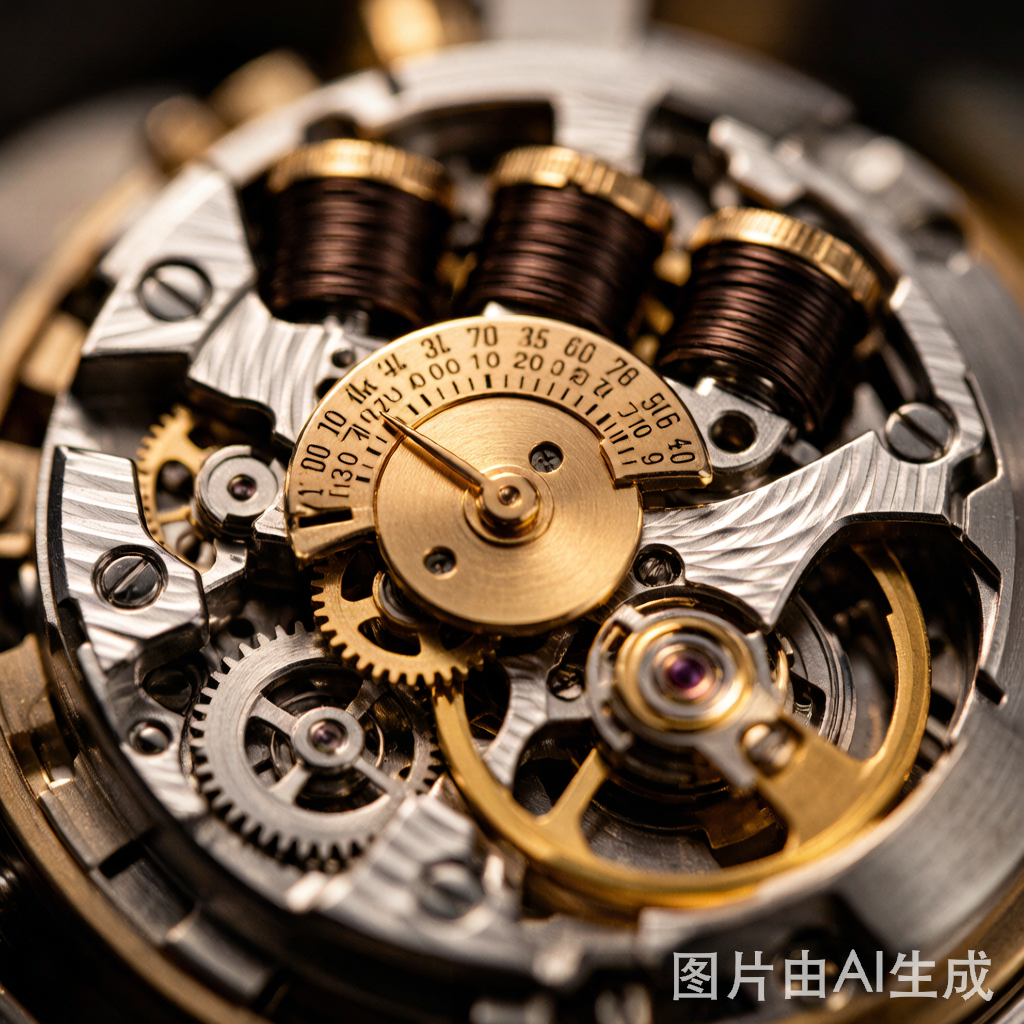
Watch Power Reserve Indicators: How Power Reserve Complications Work and Why They Matter
The power reserve indicator is one of the most practical and visually appealing complications in mechanical watchmaking. Unlike tourbillons or perpetual calendars that exist primarily as technical showcases, a power reserve indicator provides genuinely useful information: it tells the wearer how much running time remains before the watch stops and needs winding. For watch buyers and private label brands, understanding this complication is essential for product development and customer education.
This comprehensive guide examines the engineering behind power reserve indicators, their implementation in various movement architectures, and their value proposition for different market segments. Whether you are sourcing mechanical movements from Chinese suppliers or designing complications for premium private label products, this knowledge will help you leverage power reserve indicators effectively in your product strategy.
What Is a Power Reserve Indicator?
A power reserve indicator, sometimes called a reserve de marche in French watchmaking terminology, is a mechanical complication that displays the remaining energy stored in the watch mainspring. It functions similarly to a fuel gauge in a car, showing how much power remains before the movement stops running. The Wikipedia article on power reserve provides a useful technical overview of this complication.
The power reserve is typically displayed as a small subdial or arc-shaped indicator on the watch face, with markings showing the remaining hours of operation. Some designs use a simple linear scale, while others employ more elaborate displays including fan-shaped indicators or digital readouts in smartwatches.
Why Power Reserve Matters for Mechanical Watches
In a mechanical watch, energy is stored in the mainspring, which gradually releases power to drive the movement as it unwinds. The duration that a fully wound mainspring can power the movement is called the power reserve. Standard automatic watches typically have power reserves of 38 to 48 hours, while manual-wind movements range from 40 to 80 hours.
Without a power reserve indicator, the wearer has no way to know how much energy remains until the watch actually stops. This can be problematic for automatic watches that are not worn daily, as the movement may stop unexpectedly. A power reserve indicator eliminates this uncertainty by providing real-time information about remaining energy.
How Power Reserve Indicators Work
The power reserve indicator mechanism is connected to the mainspring barrel and measures the winding state of the spring. As the mainspring winds tighter, the indicator moves toward the “full” position. As the spring unwinds and releases energy, the indicator moves toward the “empty” position.
The mechanism typically consists of the following components:
- Mainspring barrel: The energy storage unit that powers the movement
- Sensor mechanism: A differential gear system that translates barrel rotation into indicator position
- Display mechanism: Subdial, arc indicator, or linear scale showing remaining power
- Reduction gears: Gears that scale the barrel rotation to the indicator range
The differential gear system is the heart of the power reserve complication. It compares the rotation of the mainspring barrel (which decreases as the spring unwinds) with the rotation of the winding mechanism (which increases as the spring is wound). The difference between these two rotations drives the indicator hand, providing a continuous, accurate reading of remaining power.
Types of Power Reserve Displays
Power reserve indicators come in several display formats, each with distinct aesthetic and functional characteristics:
Arc or Sector Displays
Arc-shaped indicators are the most common power reserve display type. A small hand sweeps across an arc-shaped track, typically spanning 120 to 180 degrees. The arc is usually marked with “HIGH” and “LOW” or numerical hour markings. This design is compact and easily integrated into existing dial layouts.
Subdial Displays
Subdial power reserve indicators use a full 360-degree dial, similar to a small clock face. This format allows for more precise markings but requires more dial space. Subdial displays are common in chronograph watches that already have multiple subdials.
Linear Indicators
Linear power reserve indicators display remaining power along a straight line, similar to a thermometer or battery gauge. This modern design is less common but offers a distinctive aesthetic that appeals to contemporary design sensibilities.
Retrograde Displays
Retrograde power reserve indicators sweep across an arc and then snap back to the starting position when fully wound. This elegant display is popular in haute horlogerie and adds visual drama to the winding experience.
Standard Power Reserve Durations
The power reserve duration varies significantly between movement types and manufacturers:
Standard Automatic Movements (38-48 hours)
The majority of automatic mechanical movements offer power reserves between 38 and 48 hours. This duration allows the watch to be set down on Friday evening and still be running on Monday morning, which is sufficient for most users. The ETA 2824-2 and Sellita SW200, widely used in mid-range watches, offer 38 and 40 hours respectively.
Extended Power Reserve Movements (70-80 hours)
Extended power reserve movements, often marketed as “weekend-proof” or “long power reserve,” can run for 70 hours or more on a single wind. The ETA Powermatic 80, used in many Tissot and Certina models, offers 80 hours of power reserve. This extended duration is achieved through modifications to the mainspring and barrel design, including longer and thinner springs that store more energy.
For B2B buyers sourcing from Shenzhen watch manufacturers, extended power reserve movements are increasingly available at competitive prices, making them a valuable differentiator for mid-range products.
Ultra-Long Power Reserve (5+ days)
Premium and haute horlogerie brands have developed movements with extraordinary power reserves. The Panerai P.5000 offers 8 days (192 hours) of power reserve, while the Hublot MP-05 LaFerrari achieves an astonishing 50 days (1200 hours). These ultra-long power reserves require multiple mainspring barrels and specialized engineering.
While ultra-long power reserves are impressive marketing features, their practical benefit over standard 38-48 hour reserves is limited for most users. For private label watch brands, extended 70-80 hour reserves offer the best balance of practical benefit and cost.
Multiple Barrel Systems
Extended and ultra-long power reserves are typically achieved using multiple mainspring barrels connected in series. When barrels are connected in series, the output of one barrel feeds into the next, effectively multiplying the power storage capacity. This approach is more complex than using a single longer barrel but enables more compact movement designs.
Some manufacturers also use parallel barrel configurations, where multiple barrels drive the movement simultaneously. This approach distributes the load across multiple springs, reducing stress on each individual spring and potentially improving torque delivery consistency throughout the power reserve.
When specifying movements for custom watch manufacturing, the choice between single and multiple barrel systems affects both cost and performance. Multiple barrel systems are more expensive but offer smoother power delivery and longer service intervals.
Power Reserve and Movement Accuracy
The relationship between power reserve and accuracy is more complex than it might initially appear. A mechanical watch’s accuracy depends on consistent torque delivery to the balance wheel, which in turn depends on the mainspring’s tension. As a mainspring unwinds, the torque it delivers gradually decreases, which can affect the amplitude of the balance wheel and, consequently, the watch’s accuracy.
Modern movements address this through several mechanisms:
Mainspring with Constant-Force Device
Constant-force mechanisms, known as force constante in French, ensure consistent torque delivery regardless of the mainspring’s winding state. These mechanisms use a small intermediate spring that is re-tensioned at regular intervals, providing constant force to the escapement. This technology is complex and expensive, typically reserved for haute horlogerie pieces.
Modern Alloy Mainsprings
Modern mainsprings are made from specialized alloys that maintain relatively constant torque throughout their unwinding cycle. These alloys, developed by companies like Nivarox, provide much flatter torque curves than traditional steel springs, reducing accuracy variation across the power reserve range.
For B2B buyers, understanding the relationship between power reserve and accuracy helps evaluate supplier claims. A movement with a longer power reserve is not inherently more accurate; in fact, if the torque drops significantly at the end of the reserve, accuracy may suffer. Request accuracy data across the full power reserve range when evaluating movement suppliers.
Power Reserve Indicators in Different Watch Types
Dress Watches
In dress watches, power reserve indicators are often presented as elegant subdials that complement the overall aesthetic. The complication adds visual interest without overwhelming the dial design. For business watches, a power reserve indicator conveys technical sophistication and attention to detail.
Dive Watches
Power reserve indicators on dive watches serve a practical purpose: confirming that the watch has sufficient power before a dive. Some dive watch designs position the power reserve indicator on the case back rather than the dial, maintaining dial legibility while still providing the information.
Skeleton Watches
In skeleton watches, the power reserve mechanism is visible through the open-worked movement, adding visual interest to the complication. The mechanical interaction between the barrel and indicator is fascinating to observe and enhances the appeal of skeleton designs.
Chronograph Watches
Power reserve indicators on chronograph watches must compete for dial space with chronograph subdials. Careful dial layout is essential to prevent a cluttered appearance. Some designs integrate the power reserve into the chronograph subdial, using a concentric scale arrangement.
Manual Wind vs Automatic Power Reserve
Power reserve indicators are particularly valuable for manual-wind watches, where the wearer must actively wind the movement. The indicator provides clear guidance on when winding is needed, preventing the watch from stopping unexpectedly. For mechanical watch enthusiasts, the daily winding ritual is part of the appeal, and the power reserve indicator adds precision to this routine.
In automatic watches, the power reserve indicator is less critical because the movement winds itself through wrist movement. However, it remains useful for watches that are not worn daily or for monitoring the winding efficiency of the automatic system. An automatic watch that consistently shows low power reserve may indicate insufficient wrist movement or a problem with the winding mechanism.
Manufacturing Considerations for Power Reserve Complications
Adding a power reserve complication to a movement increases manufacturing complexity in several ways:
- Additional components: 15-30 extra parts including gears, springs, and indicator components
- Assembly complexity: More components to assemble and adjust, increasing labor costs
- Testing requirements: Power reserve accuracy must be verified across the full winding range
- Service complexity: More components to disassemble, clean, and reassemble during maintenance
- Quality control: Additional inspection points for the indicator mechanism
For MOQ and pricing considerations, adding a power reserve complication typically increases movement cost by 15 to 30 percent compared to a base movement without the complication. The cost increase is lower for movements where the complication is integrated into the base design rather than added as a module.
Supplier Evaluation for Power Reserve Movements
When evaluating suppliers for power reserve movements, B2B buyers should assess:
Accuracy across the power reserve range: The movement should maintain consistent accuracy from full wind to empty. Request test data showing rate variation at 100%, 75%, 50%, and 25% of power reserve.
Indicator precision: The power reserve indicator should accurately reflect the actual remaining power. Variations between indicated and actual power should be within 5 percent.
Build quality: The additional gears and springs should meet the same quality standards as the base movement. Inspect for proper finishing, clean edges, and smooth operation.
Service documentation: Suppliers should provide complete service manuals including exploded diagrams of the power reserve mechanism for after-sales support.
Marketing Power Reserve as a Product Feature
For private label brands, power reserve indicators offer compelling marketing opportunities:
Technical credibility: A visible power reserve complication signals mechanical sophistication and positions the product above basic three-hand watches.
Practical utility: Unlike tourbillons or moon phase indicators that are primarily decorative, power reserve indicators provide genuinely useful information.
Visual storytelling: The indicator provides a visual representation of the mechanical energy stored in the watch, creating an emotional connection between the wearer and the movement.
Extended reserve as differentiator: Marketing a 70-80 hour power reserve as “weekend-proof” resonates with consumers who remove their watches on weekends.
Power Reserve in Smartwatches and Hybrid Watches
While power reserve indicators are traditionally associated with mechanical watches, the concept has relevance in the smartwatch and hybrid watch markets. Smartwatches display battery life as a digital percentage, which is conceptually similar to a power reserve indicator. Hybrid watches that combine mechanical movements with smart features may include power reserve indicators for both the mechanical movement and the electronic functions.
As the smartwatch market matures, the integration of traditional complications with digital displays creates new opportunities for product differentiation. A mechanical watch with a digital power reserve display bridges the gap between traditional and modern watchmaking, appealing to consumers who appreciate both craftsmanship and technology.
Future Trends in Power Reserve Technology
The power reserve complication continues to evolve, with several trends shaping its future development:
Longer reserves as standard: As manufacturing techniques improve, 70-80 hour power reserves are becoming standard rather than premium features. This trend benefits B2B buyers by making extended reserves available at lower cost points.
Integration with smart features: Power reserve data transmitted to smartphone apps enables monitoring and alerts, combining traditional mechanical appeal with digital convenience.
Sustainable energy harvesting: Research into alternative energy sources for mechanical watches, including kinetic and solar charging systems, may eventually extend power reserves beyond traditional spring limitations.
Advanced materials: New mainspring materials, including silicon-based composites, may enable longer and more consistent power delivery without increasing barrel size.
For 2026 watch trends, expect extended power reserves to become a standard expectation rather than a premium differentiator, particularly as Chinese manufacturers adopt these technologies at competitive price points.
Conclusion
The power reserve indicator is one of the most practical and accessible complications in mechanical watchmaking, offering genuine utility alongside visual appeal. For B2B buyers and private label brands, understanding the technical and commercial aspects of power reserve complications enables better product development decisions and more effective marketing strategies.
As extended power reserves become standard and the complication becomes more widely available from Chinese manufacturers, the power reserve indicator will increasingly shift from a premium feature to a baseline expectation. Brands that adopt this complication early and communicate its benefits effectively will build credibility and differentiation in competitive markets. Whether through a simple arc indicator or a sophisticated retrograde display, the power reserve complication adds both functional value and mechanical romance to any watch collection.
Related Articles
- Watch Movement Types Explained
- Automatic Watches Complete Guide
- Mechanical vs Quartz Watches
- Tourbillon Watches Guide
- Moon Phase Watches Guide
- Chronograph Watches Guide
- GMT Watches Guide
- Skeleton Watches Guide
- Custom Watch Manufacturing Guide
- Private Label Watches Guide
- Watch Quality Control Standards
- Watch Customization MOQ and Pricing
- Movement Decoration Techniques
- Anti-Magnetic Technology Guide
- Watch Industry Certifications Guide
- Dive Watches Guide
- Best Business Watches for Men
- Smart Watch Market Growth
- Shenzhen Watch Manufacturing Hub
- China Watch Technology Revolution