
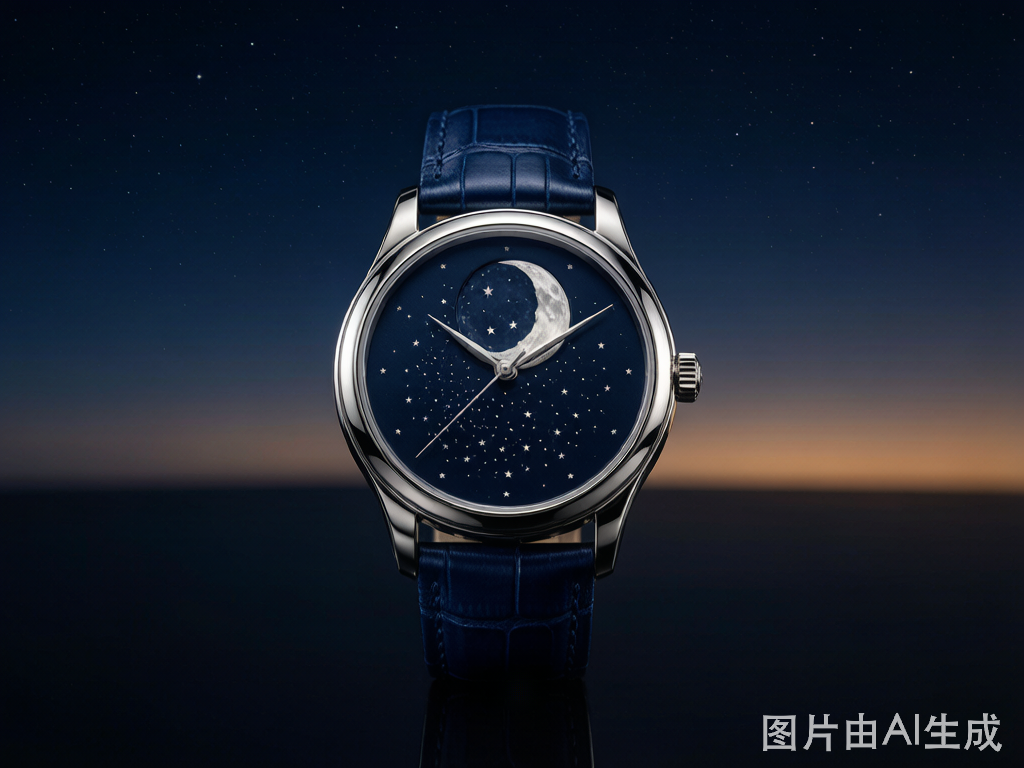
Moon Phase Watches: The Complete Guide to Lunar Complications in 2026
Of all the complications in watchmaking, none is more poetic, more romantic, or more visually captivating than the moon phase. This elegant display tracks the lunar cycle as it waxes and wanes across the sky, bringing a touch of celestial artistry to the wrist. In an age of atomic clocks and satellite timekeeping, the moon phase complication stands as a testament to the artistry and ambition of mechanical watchmaking — a bridge between astronomy and horology that has captivated collectors for centuries.
What Is a Moon Phase Watch?
A moon phase watch displays the current phase of the moon as it appears in the sky. Through a small aperture on the watch dial, a rotating disc painted with two moons (or sometimes one) gradually reveals and conceals the lunar surface, mimicking the moon’s 29.5-day cycle from new moon to full moon and back.
Unlike practical complications like chronographs or GMT functions, the moon phase serves no utilitarian purpose for most modern wearers. It is, pure and simple, a celebration of mechanical artistry — a miniature天文 display on your wrist that connects you to the rhythms of the cosmos.
The History of Moon Phase Complications
From Marine Navigation to Wrist Art
The moon phase complication dates back to the 16th century, when it appeared on astronomical clocks and pocket watches. In those days, tracking the moon was not merely decorative — it was essential for maritime navigation. Sailors used the lunar cycle to calculate longitude at sea, and accurate moon phase indications were critical tools for safe ocean travel.
The British government even offered a £20,000 prize (a fortune at the time) to anyone who could solve the “longitude problem” by accurately predicting lunar positions. This led to John Harrison’s legendary marine chronometers in the 18th century, some of which included moon phase indications.
The Transition to Wristwatches
As pocket watches gave way to wristwatches in the early 20th century, the moon phase complication made the transition as well. Patek Philippe introduced some of the first wristwatches with moon phase displays in the 1920s, cementing the complication’s association with high-end watchmaking. By the 1980s, brands like Blancpain with their classic Villeret line and A. Lange & Söhne with the Lange 1 Moonphase had elevated the moon phase from functional tool to horological art form.
For those interested in the broader history of watchmaking, our guide to mechanical watch complications traces the evolution from simple time-only watches to complex instruments.
How Does a Moon Phase Complication Work?
The Lunar Cycle Problem
The fundamental challenge of any moon phase watch is that the synodic month — the time from one new moon to the next — is approximately 29.53 days (29 days, 12 hours, 44 minutes, and 2.9 seconds, to be precise). This is not a clean number, which makes mechanical representation tricky.
The Traditional 59-Tooth Gear
Most moon phase watches use a 59-tooth gear that advances one tooth every 24 hours. Since the gear has two moons painted on it, each moon appears through the aperture every 29.5 days (59 teeth divided by 2). This produces a lunar cycle of exactly 29.5 days, which is close to the actual 29.53-day cycle but not perfect.
The result is that a traditional moon phase watch accumulates an error of approximately one day every 2.5 years. For most wearers, this is negligible — you simply adjust the moon phase when you set the watch. But for horological purists, even this small error is unacceptable.
High-Precision Moon Phase Mechanisms
Several manufacturers have developed more precise moon phase mechanisms:
- Standard moon phase: 59-tooth gear, error of 1 day per 2.5 years
- Refined moon phase: 135-tooth gear, error of 1 day per 122 years
- Ultra-precision moon phase: Custom gear trains, error of 1 day per 577 years (IWC) or even 1 day per 2 million years (some Greubel Forsey models)
The engineering required to achieve such precision is extraordinary. A 135-tooth gear, for example, requires teeth so fine they are barely visible to the naked eye, and the gear must be manufactured to tolerances measured in microns.
Types of Moon Phase Displays
1. The Classic Aperture (Bosom) Moon Phase
The most traditional and common style features a heart-shaped or semicircular aperture on the dial through which the moon disc rotates. Two gold or blue moons are painted on the disc, and a decorative sky with stars often surrounds the aperture. This is the style used by Patek Philippe, A. Lange & Söhne, and most classic dress watches.
2. The Hemispherical Moon Phase
Some brands use a three-dimensional hemispherical moon that physically rises and sets, creating a more realistic lunar display. Brands like Christiaan van der Klaauw and De Bethune are known for this approach, which adds remarkable depth and realism to the complication.
3. The Southern/Northern Hemisphere Display
Since the moon appears differently in the Northern and Southern hemispheres (the phases are mirrored), some watches display both hemispheres simultaneously. This is particularly useful for world travelers and adds visual interest to the dial.
4. The Depressed (Smiling) Moon
A charming variation where the moon has a face — sometimes smiling, sometimes serene. This whimsical approach is favored by brands like Frederique Constant and adds personality to the timepiece.
The Best Moon Phase Watches in 2026
Affordable Moon Phase Watches (Under $1,000)
Frederique Constant Slimline Moonphase: Frederique Constant has made moon phase watches accessible without sacrificing elegance. The Slimline collection features a clean, classic design with the moon phase aperture at 6 o’clock, all powered by a reliable automatic movement.
Tissot Le Locle Powermatic 80 Moonphase: Tissot brings Swiss quality to an accessible price point. The Le Locle model combines a moon phase display with an 80-hour power reserve, making it one of the best value moon phase watches on the market.
Mid-Range Moon Phase Watches ($1,000–$10,000)
Oris Artelier Calibre 113: Oris developed their in-house Calibre 113 specifically for the moon phase complication. With a non-magnetic hairspring, 120-hour power reserve, and a beautiful open dial design, it represents exceptional value in the mid-range segment.
Mido Baroncelli Moon Phase: Mido’s Baroncelli line offers elegant dress watches with moon phase complications at very competitive prices. The refined aesthetic and reliable Swiss movements make these watches excellent everyday wearers.
Haute Horlogerie Moon Phase Watches ($10,000+)
Patek Philippe 5396G Annual Calendar with Moon Phase: Patek Philippe is synonymous with moon phase complications. The 5396G combines an annual calendar with a moon phase display, all presented in a stunning white gold case with a hand-finished movement visible through the sapphire caseback.
A. Lange & Söhne Lange 1 Moon Phase: The Lange 1 Moon Phase is widely regarded as one of the most beautiful moon phase watches ever made. The off-center dial layout, the precision of the 135-tooth gear (accurate for 122 years), and the exceptional finishing of the L121.3 caliber make it a grail watch for many collectors.
IWC Portugieser Perpetual Calendar Moon Phase: IWC’s perpetual calendar features an ultra-precision moon phase that deviates by only one day in 577 years. The double moon display shows both Northern and Southern hemispheres, making it a true astronomical instrument.
If you appreciate mechanical complexity beyond moon phases, our guide to skeleton watches showcases timepieces that reveal their inner workings in stunning detail.
Moon Phase Watches as Gifts
The romantic and artistic nature of moon phase watches makes them exceptional gifts for special occasions. A moon phase watch communicates thoughtfulness, appreciation for craftsmanship, and a sense of timeless elegance that few other gifts can match.
Wedding and Anniversary Gifts
A moon phase watch is a popular choice for wedding gifts and anniversaries, as the lunar cycle symbolizes the passage of time and the rhythms of life shared together. Our couple watches gift guide offers additional suggestions for matching timepieces.
Graduation Gifts
A moon phase watch makes a meaningful graduation gift, symbolizing the graduate’s journey through the phases of life. For more gift ideas, see our graduation gift watch guide.
Setting and Maintaining a Moon Phase Watch
Setting the Moon Phase
- First, determine the current phase of the moon using a lunar calendar or astronomy app
- Use the correction pusher (usually on the case side) to advance the moon disc to the correct position
- Avoid adjusting the moon phase between 8 PM and 4 AM, as the mechanism is engaged with the date change during this period
- Recheck the moon phase accuracy every 2-3 months and adjust as needed
Maintenance Tips
- Service the movement every 4-5 years to ensure the moon phase mechanism remains accurate
- Store the watch in a cool, dry place away from direct sunlight to preserve the painted moon disc
- Avoid pressing the correction pusher underwater or with wet hands
- Use a quality watch strap that complements the dressy nature of moon phase watches
- Keep the watch away from strong magnetic fields that could affect the movement’s accuracy
The Symbolism and Appeal of Moon Phase Watches
A Connection to the Cosmos
Before electric lights and digital screens, the moon governed human activity — from agriculture to navigation to religious observances. A moon phase watch reconnects us to this ancient rhythm, serving as a daily reminder of our place in the universe. It is, in a very real sense, a small mechanical model of the heavens.
The Romance of Mechanical Art
The moon phase complication embodies the romantic ideal of mechanical watchmaking: that gears, springs, and levers can capture the beauty of nature with extraordinary precision. This is why moon phase watches are often found on classic dress watches — they represent the pinnacle of the watchmaker’s art.
A Conversation Starter
Unlike more common complications, the moon phase display draws attention and invites questions. It is a distinctive feature that sets a watch apart from the crowd and demonstrates the owner’s appreciation for horological craftsmanship.
Moon Phase Watches and Modern Technology
Interestingly, the moon phase complication has found new relevance in the age of smartwatches. Several hybrid models now combine digital moon phase displays with traditional mechanical movements, offering the best of both worlds. Additionally, the growing interest in watch complications among younger collectors has driven renewed interest in this classic feature.
For those exploring the intersection of traditional and modern watchmaking, understanding different movement types can help you choose between mechanical and quartz-based moon phase watches.
Frequently Asked Questions
How accurate are moon phase watches?
Standard moon phase watches accumulate an error of about 1 day every 2.5 years. High-precision models can go 122 years or even 577 years before needing adjustment.
Do I need to adjust the moon phase regularly?
For standard moon phase watches, check and adjust every 2-3 months. For high-precision models, adjustment may only be needed once every few decades.
Are moon phase watches practical?
Not in the traditional sense — but they are profoundly satisfying. The moon phase is about artistry, not utility, and that is precisely its appeal.
Conclusion
Moon phase watches represent the soul of haute horlogerie — the intersection of mechanical precision, astronomical observation, and artistic expression. They remind us that watches are not merely timekeeping tools but miniature mechanical models of the universe, capable of tracking celestial rhythms with astonishing accuracy.
Whether you choose an affordable Frederique Constant or a grail-level A. Lange & Söhne, a moon phase watch brings a touch of poetry to your wrist that no other complication can match. It is a daily reminder that time is not just measured in hours and minutes but in the eternal cycles of the cosmos. For those seeking wholesale watches with moon phase complications, exploring manufacturers in China’s growing horological industry can reveal exceptional value.
Leave a Reply