
Tourbillon Watches: The Complete 2026 Guide to Horology’s Most Dazzling Complication
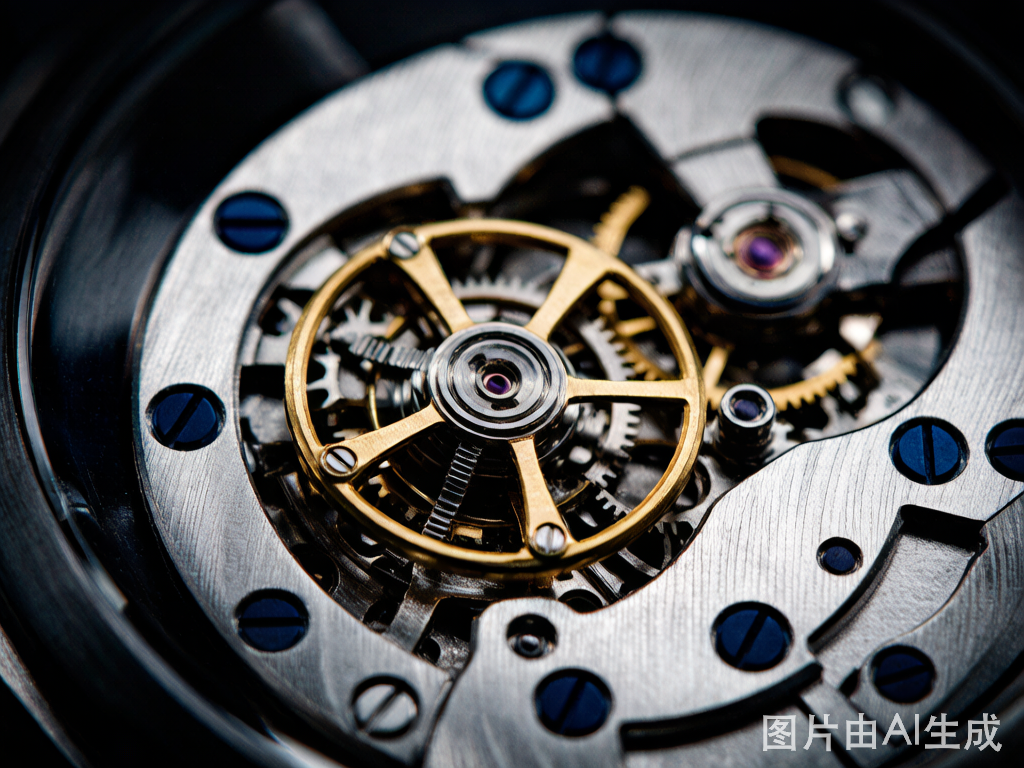
No complication in watchmaking captures the imagination quite like the tourbillon. French for “whirlwind,” the tourbillon is a rotating cage that houses the escapement and balance wheel, completing a full rotation typically once per minute. Its purpose is to counteract the effects of gravity on the movement’s timekeeping — and its visual effect is nothing short of mesmerizing. Watching a tourbillon spin at the heart of a watch is like watching a mechanical ballet, a tiny universe of gears and springs in perpetual motion. In 2026, the tourbillon remains the crown jewel of haute horlogerie, a symbol of watchmaking virtuosity that continues to evolve and surprise.
What Is a Tourbillon and How Does It Work?
To understand the tourbillon, we must first understand the problem it was designed to solve. In a mechanical watch, the escapement — the mechanism that regulates the release of energy from the mainspring — is extremely sensitive to gravity. The balance wheel oscillates back and forth, and gravity pulls on it unevenly depending on the watch’s position. When the watch is dial-up or dial-down (horizontal), gravity affects the balance wheel differently than when it is crown-up, crown-down, or vertical.
In pocket watches, which typically sat vertically in a vest pocket for most of the day, this positional variance could cause significant accuracy deviations. The tourbillon addresses this by placing the entire escapement — balance wheel, hairspring, pallet fork, and escape wheel — inside a rotating cage. As the cage rotates (typically once per minute), each positional error averages out over the cycle. The errors that would occur in one position are canceled out by the errors in the opposite position 30 seconds later.
The Genius of Breguet’s Design
The tourbillon was patented in 1801 by Abraham-Louis Breguet, one of the greatest watchmakers in history. Breguet recognized that while he could not eliminate gravity’s effect on the escapement, he could distribute it evenly across all positions by continuously rotating the escapement. The result was a more consistent rate across different positions.
It is important to note that the tourbillon does not make a watch more accurate in absolute terms — it makes it more consistent across positions. For a pocket watch that spends most of its day in one vertical position, this is significant. For a modern wristwatch that constantly changes position through natural wrist movement, the practical benefit is debatable. But the tourbillon was never just about accuracy — it is about demonstrating the pinnacle of watchmaking skill.
For a broader understanding of mechanical watch complications, our mechanical watch guide provides additional context on the evolution of horological complexity.
The History of the Tourbillon
1801-1900: The Pocket Watch Era
For the first century of its existence, the tourbillon was exclusively used in pocket watches and marine chronometers. Only a handful of watchmasters had the skill to construct one, and tourbillon pocket watches were extraordinarily rare and expensive. Breguet himself produced only a limited number, and other manufacturers like Patek Philippe and Vacheron Constantin created them only for the most distinguished clients.
1947: The First Wristwatch Tourbillon
It was not until 1947 that the first tourbillon wristwatch was created — and it was not by a Swiss manufacturer. Omega produced a small run of tourbillon wristwatches for observatory timing competitions, but these were never sold to the public. The movement, Caliber 30T, was a technical marvel but remained a prototype.
1986: The Modern Tourbillon Renaissance
The modern tourbillon era began in 1986 when Patek Philippe introduced the Reference 39701R — the first wristwatch tourbillon available to the public (though produced in extremely limited numbers). But the true catalyst was Franck Muller, who in 1992 presented his tourbillon at Baselworld, igniting a renaissance of haute horlogerie that continues to this day.
By the 2000s, brands like Breguet, A. Lange & Söhne, Glashütte Original, and Audemars Piguet had all developed their own tourbillon movements, each pushing the boundaries of what was mechanically possible.
Types of Tourbillons
The Classic (Caged) Tourbillon
The classic tourbillon uses a cage supported by bridges on both the top and bottom, with the escapement visible through the cage bars. This is Breguet’s original design and remains the most traditional form. The cage typically rotates once per minute, driven by the fourth wheel of the movement.
The Flying Tourbillon
The flying tourbillon (also known as a cantilevered tourbillon) was invented by Alfred Helwig in 1920 at the German Watchmaking School in Glashütte. Unlike the classic tourbillon, which is supported by bridges on both sides, the flying tourbillon is supported by only one side — the bottom bridge is eliminated, creating the illusion that the cage is floating freely in space. This design allows an unobstructed view of the tourbillon mechanism and is considered more visually dramatic.
The flying tourbillon is a specialty of German watchmakers, particularly A. Lange & Söhne and Glashütte Original, though many Swiss and Asian brands now produce their own versions. For a visual comparison with other open-architecture watch designs, see our skeleton watches guide.
The Double Tourbillon
The double tourbillon features two separate tourbillon cages, each rotating independently. The most famous example is the Greubel Forsey Double Tourbillon 30°, which uses one tourbillon inclined at 30° that rotates every four minutes, nested inside a second tourbillon that rotates every four minutes. The result is an extraordinary averaging of positional errors.
Other variations include:
- Bi-axial tourbillon: A single cage rotates around two different axes simultaneously
- Tri-axial tourbillon: Rotation around three axes — the ultimate expression of the concept
- Gyro tourbillon: A multi-axis tourbillon with a spherical cage, like the Jaeger-LeCoultre Gyrotourbillon
The Flying Seconds Tourbillon
Some tourbillons combine the rotating cage with a flying seconds complication, where a small seconds hand completes one rotation per minute around the tourbillon cage. This creates a visually stunning effect of multiple rotating elements working in harmony.
The Chinese Tourbillon Revolution
Perhaps the most significant development in the tourbillon world in the past two decades has been the emergence of affordable tourbillons from China. For nearly 200 years, the tourbillon was exclusively a high-end Swiss or German complication, with prices starting at $50,000 and often exceeding $500,000. The Chinese watch industry has dramatically changed this landscape.
Beijing Watch Factory
The Beijing Watch Factory (Beijing Watch) developed China’s first tourbillon movement in the 1990s and has since produced increasingly sophisticated designs. Their TB01 movement powers several tourbillon models priced between $2,000 and $10,000 — a fraction of the cost of Swiss equivalents.
Seagull (Tianjin Sea-Gull)
Seagull, one of China’s largest mechanical movement manufacturers, produces the ST8000 series tourbillon movement. Seagull tourbillon watches are available for under $1,500, making them the most affordable mechanical tourbillons in the world. While the finishing and movement architecture may not match Swiss haute horlogerie standards, they represent remarkable value and have introduced thousands of enthusiasts to the tourbillon complication.
Maison Celadon and Other Premium Chinese Brands
Several Chinese brands are pushing into the premium segment with high-quality finishing and design. Maison Celadon produces tourbillons with hand-finished movements that rival Swiss quality at significantly lower prices. For those interested in wholesale watches from China, tourbillon models offer compelling value propositions for the discerning buyer.
The Best Tourbillon Watches in 2026
Affordable Tourbillons (Under $5,000)
Seagull Tourbillon: The Seagull ST8000 remains the entry point to mechanical tourbillon ownership. While the finishing is industrial rather than hand-applied, the rotating cage is genuinely mesmerizing, and the watch offers an authentic tourbillon experience at an unprecedented price.
Beijing Watch TB01: The Beijing Watch Factory’s tourbillon offers better finishing than the Seagull at a slightly higher price point. The exposed cage at 6 o’clock provides excellent visibility of the complication.
Mid-Range Tourbillons ($5,000–$30,000)
Tag Heuer Carrera Tourbillon: Tag Heuer stunned the watch world by offering a tourbillon chronograph at a relatively accessible price point (around $15,000-$20,000). The Caliber Heuer 02T movement combines a tourbillon with a chronograph function, offering exceptional value in the luxury segment.
H. Moser & Cie Streamliner Tourbillon: H. Moser is known for its minimalist approach to haute horlogerie. The Streamliner Tourbillon features a flying tourbillon at 6 o’clock with a minimalist dial that lets the complication speak for itself. The in-house HMC 805 movement offers a 7-day power reserve.
Haute Horlogerie Tourbillons ($30,000+)
Breguet Classique Tourbillon Extra-Plat: Breguet, the inventor of the tourbillon, continues to produce some of the finest examples. The Extra-Plat (extra-thin) features an ultra-thin flying tourbillon cage made of titanium, visible through a sapphire dial. The hand-engraved guilloché dial and Breguet hands make this a masterpiece of traditional watchmaking.
A. Lange & Söhne Datograph Perpetual Tourbillon: Lange combines three of watchmaking’s most prestigious complications — chronograph, perpetual calendar, and tourbillon — in one extraordinary timepiece. The hand-finished L952.2 movement is a work of art visible through the sapphire caseback. For those who appreciate open-heart designs, this watch reveals its full mechanical glory.
Greubel Forsey Double Tourbillon 30° Vision: Greubel Forsey represents the absolute cutting edge of tourbillon innovation. Their Double Tourbillon 30° features two nested cages rotating on different axes, creating a hypnotic visual effect. Each movement is assembled, finished, and regulated by hand, with prices exceeding $600,000.
Does the Tourbillon Actually Improve Accuracy?
This is one of the most debated questions in watchmaking. The honest answer is: it depends.
In pocket watches, where the watch sits in one position for extended periods, the tourbillon provides a measurable accuracy improvement by averaging out positional errors. This was Breguet’s original intent, and it worked.
In wristwatches, the benefit is far less clear. A wristwatch naturally changes position throughout the day as the wearer moves their arm. This natural movement already averages out positional errors, making the tourbillon’s continuous rotation somewhat redundant. Modern testing has shown that a well-regulated tourbillon wristwatch is not inherently more accurate than a well-regulated non-tourbillon watch.
So why does the tourbillon persist? Because watchmaking is not purely about utility. The tourbillon is a demonstration of mastery — a statement that the manufacturer possesses the skill, resources, and ambition to create one of watchmaking’s most demanding complications. It is the mechanical equivalent of a chef’s signature dish: not necessary for nutrition, but essential for proving expertise. The mechanical watch renaissance has always been about emotion as much as function.
Caring for a Tourbillon Watch
Tourbillon watches require specialized care due to the complexity and delicacy of the mechanism:
- Service only by qualified watchmakers — not every watchmaker has the skill to service a tourbillon. Sending a tourbillon to an unauthorized service center can result in permanent damage.
- Service every 4-5 years — the tourbillon cage contains jewels and pivots that require periodic lubrication. See our watch maintenance guide for general servicing principles.
- Avoid shock and vibration — the tourbillon cage is extremely delicate. A sharp impact can bend the cage or damage the pivots.
- Keep away from magnetic fields — the hairspring inside the tourbillon is susceptible to magnetization, which can dramatically affect accuracy.
- Store in a quality watch case — tourbillon watches are significant investments and should be stored with care. A quality watch case or winder protects both the movement and the case finish.
Tourbillon Watches as Investment Pieces
High-end tourbillon watches from prestigious manufacturers have shown strong investment potential. Limited production numbers, hand-finishing, and brand prestige contribute to value retention and appreciation. However, affordable tourbillons from Chinese manufacturers are less likely to appreciate significantly, as their production is not as limited.
For investment purposes, key considerations include:
- Brand reputation — Breguet, Patek Philippe, A. Lange & Söhne, and Greubel Forsey are the most sought-after
- Production numbers — limited editions and unique pieces hold value better
- Condition and documentation — original boxes, papers, and service records are essential
- Complication combinations — tourbillons combined with other complications (perpetual calendar, chronograph, minute repeater) are more desirable
The Tourbillon in Modern Watch Culture
In 2026, the tourbillon occupies a unique position in watch culture. It is simultaneously a centuries-old invention and a contemporary status symbol. The rise of affordable Chinese tourbillons has democratized access to the complication, while Swiss and German haute horlogerie continues to push the boundaries with multi-axis, inclined, and combined complications.
The tourbillon also represents the philosophical heart of mechanical watchmaking — the idea that human ingenuity can create miniature machines of extraordinary beauty and precision, machines that defy gravity itself. In an era of smartwatches and atomic clocks, the tourbillon is a defiant celebration of the mechanical arts, a reminder that some things are worth doing not because they are efficient, but because they are beautiful.
For collectors who appreciate the intersection of art and engineering, the tourbillon pairs beautifully with other visual complications. A tourbillon combined with a moon phase display creates a poetic astronomical instrument. Combined with a GMT function, it becomes a world-traveling masterpiece. And for those who appreciate classic elegance, a simple time-only tourbillon on a leather strap is the ultimate expression of horological refinement.
Frequently Asked Questions
Why are tourbillon watches so expensive?
Tourbillon movements require exceptional skill to design, manufacture, and assemble. Each cage must be perfectly balanced, the pivots must be precisely machined, and the entire mechanism must be regulated to account for the additional weight and friction of the rotating cage. Swiss and German tourbillons involve significant hand-finishing, further increasing cost.
Are Chinese tourbillons worth buying?
For enthusiasts who want to experience the tourbillon complication without spending $50,000+, Chinese tourbillons offer excellent value. While the finishing may not match Swiss standards, the mechanical principle is identical, and the visual effect is equally mesmerizing.
Can a tourbillon watch be worn daily?
Yes, modern tourbillon watches are designed for daily wear. However, given their value and the delicacy of the mechanism, many owners reserve them for special occasions. If worn daily, ensure the watch is serviced regularly and protected from shocks.
Conclusion
The tourbillon is watchmaking’s most beautiful answer to gravity — a problem most watchmakers ignore, solved with a rotating cage of gears that dances at the heart of the movement. Whether it improves accuracy in a modern wristwatch is almost beside the point. The tourbillon exists because watchmakers can create it, because enthusiasts desire it, and because the mechanical artistry it represents is worth preserving.
From Abraham-Louis Breguet’s 1801 patent to Greubel Forsey’s multi-axis masterpieces, from the affordable Seagull ST8000 to the $600,000 Double Tourbillon 30°, the tourbillon spans the entire spectrum of watchmaking ambition. In 2026, it remains the complication that best represents what haute horlogerie is all about: not just telling time, but doing so with extraordinary mechanical beauty, human ingenuity, and a defiance of the physical forces that govern our world. Explore wholesale options to discover tourbillon timepieces that bring this extraordinary complication within reach.
Leave a Reply