
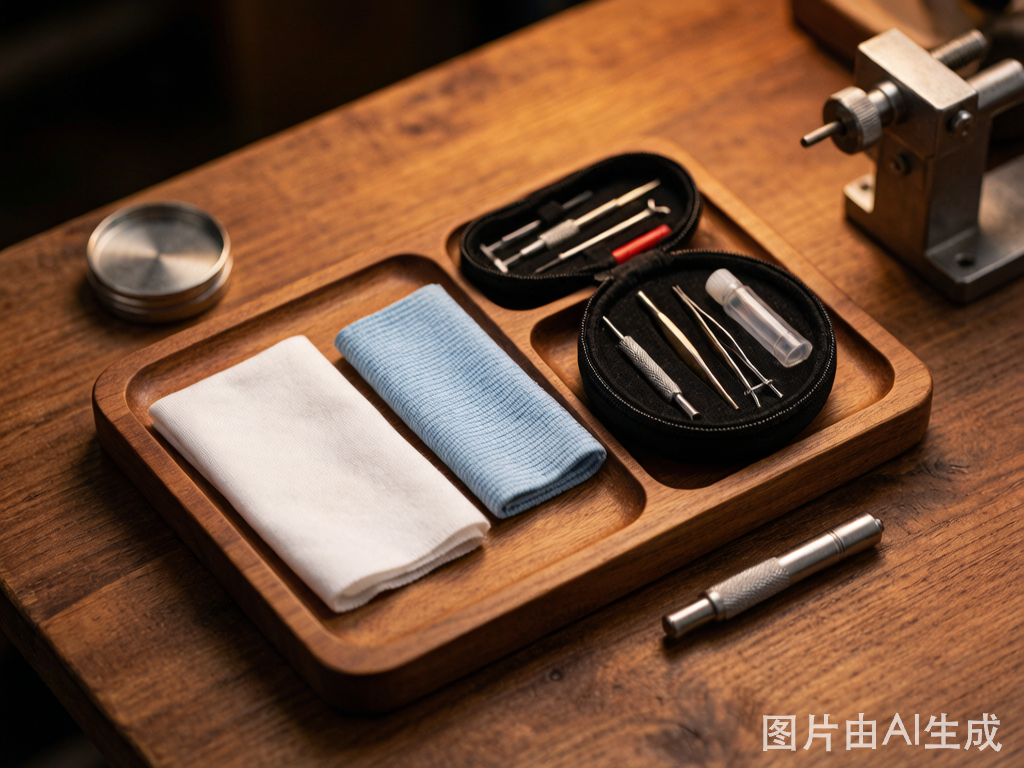
Watch Care and Maintenance: The Complete 2026 Guide to Protecting Your Timepiece
A quality watch is more than a timekeeping device — it is an investment, an heirloom, and often a deeply personal possession. Whether you wear a single cherished timepiece or curate a collection of dozens, proper watch care and maintenance will ensure your watches run accurately, look beautiful, and retain their value for decades. This comprehensive guide covers every aspect of watch maintenance, from daily care routines to professional servicing, helping you protect your horological investments in 2026 and beyond.
Why Watch Maintenance Matters
A mechanical watch is a miniature machine with hundreds of components, many smaller than a human hair. These components interact at high speeds — the balance wheel alone oscillates nearly 700,000 times per day. Without proper maintenance, lubricants degrade, parts wear against each other, and what begins as a minor inefficiency can cascade into catastrophic damage.
The cost of neglect is significant. A routine service might cost $200–$600, but replacing a damaged mainplate or gear train can run into thousands of dollars. More importantly, a well-maintained watch can last generations — we know of vintage watches from the 1960s that still run perfectly today because their owners understood the importance of regular care.
Daily Watch Care: Building Good Habits
Winding Your Watch
If you wear an automatic (self-winding) watch, the motion of your wrist keeps it powered. However, if the watch has stopped, you will need to wind it manually:
- Manual wind: Turn the crown clockwise 20-40 times until you feel resistance. Do not force it past the stopping point.
- Automatic: Give the crown 20-30 turns to start the movement, then wear the watch for at least 8 hours to build up the power reserve.
- Avoid over-winding: Modern watches have slipping clutches that prevent damage, but it is still good practice to stop when you feel resistance.
For a detailed explanation of how automatic movements work, our automatic watches guide covers the mechanics in depth.
Setting the Time and Date
One of the most common causes of movement damage is setting the date during the “danger zone” — typically between 9 PM and 3 AM, when the date-change mechanism is engaged. During this period, the gears that automatically advance the date are partially meshed, and manually changing the date can strip or bend the teeth.
Best practice: always set the time to 6:00 AM or 6:00 PM before adjusting the date. This ensures the date-change mechanism is fully disengaged.
Daily Cleaning
A simple daily routine keeps your watch looking its best:
- Wipe with a microfiber cloth after each wear to remove fingerprints, dust, and body oils
- Check the crown is fully pushed in or screwed down before washing hands or swimming
- Avoid contact with chemicals — perfume, sunscreen, lotion, and cleaning products can damage gaskets, crystals, and finishes
- Remove the watch before applying cologne or perfume, and put it on only after the fragrance has dried
Weekly and Monthly Maintenance
Deep Cleaning
Once a week, give your watch a more thorough cleaning:
- For water-resistant watches: Rinse gently with lukewarm water and mild soap. Use a soft toothbrush to clean between the lugs, bezel, and bracelet links.
- For non-water-resistant watches: Use a slightly damp microfiber cloth, being careful to avoid the crown and caseback.
- Dry thoroughly with a lint-free cloth, paying special attention to the bracelet links where moisture can accumulate.
- Clean the crystal with a dedicated watch crystal cleaner or a soft, damp cloth.
Bracelet and Strap Care
Bracelets and straps require their own maintenance routines. Metal bracelets can accumulate grime between links — soak them in warm soapy water and scrub with a soft brush. For leather, rubber, and fabric straps, follow the specific care instructions in our watch straps guide.
Leather straps, in particular, need special attention:
- Avoid getting leather straps wet — moisture causes discoloration, cracking, and odor
- Rotate straps regularly to allow them to air out and dry
- Condition leather straps every 3-6 months with a leather conditioner approved for watch straps
- Replace leather straps every 1-2 years, depending on wear patterns
Water Resistance: Understanding and Testing
What Water Resistance Ratings Really Mean
Water resistance ratings are widely misunderstood. A “30 meters” rating does not mean you can dive 30 meters deep — it means the watch was tested at a static pressure equivalent to 30 meters in laboratory conditions. Real-world water exposure involves movement, temperature changes, and pressure variations that significantly reduce effective water resistance.
| Rating | Safe For | Not Safe For |
|---|---|---|
| 30m (3 ATM) | Splashes, rain | Swimming, bathing |
| 50m (5 ATM) | Shower, shallow swimming | Diving, snorkeling |
| 100m (10 ATM) | Swimming, snorkeling | Scuba diving |
| 200m+ (20 ATM) | Scuba diving | Saturation diving |
For a comprehensive explanation of water resistance and ATM ratings, see our waterproof watches guide.
Water Resistance Testing
Have your watch’s water resistance tested annually, especially if you swim or dive regularly. Most watchmakers and authorized service centers offer pressure testing for $20–$50. This test verifies that the gaskets are intact and the crown, caseback, and crystal are properly sealed.
Gaskets — the rubber O-rings that seal the watch — degrade over time due to heat, chemicals, and natural aging. Most manufacturers recommend replacing gaskets every 2-3 years or whenever the watch is opened for service.
Professional Servicing: When and Why
Service Intervals by Movement Type
- Mechanical (automatic and manual): Every 4-5 years or 3,000-5,000 hours of operation
- Quartz: Every 5-7 years (primarily for gasket replacement and battery changes)
- Solar/Eco-Drive: Every 5-7 years (capacitor may need replacement)
- Smart/hybrid: Follow manufacturer recommendations — typically every 2-3 years
Understanding different movement types helps you determine the appropriate service schedule for each watch in your collection.
What Happens During a Service?
A full mechanical watch service, also known as a complete overhaul, involves:
- Case opening and movement removal: The watch is opened, and the movement is carefully extracted from the case.
- Complete disassembly: Every component is separated, inspected, and photographed for reference.
- Cleaning: All parts are ultrasonically cleaned in specialized solutions to remove old lubricants, dirt, and debris.
- Inspection and replacement: Worn or damaged parts are identified and replaced. Common replacements include mainsprings, gaskets, and sometimes jewels.
- Lubrication: Each component is lubricated with specific oils and greases — different parts require different lubricants with varying viscosities.
- Reassembly and regulation: The movement is reassembled, and the timing is regulated to meet the manufacturer’s accuracy specifications.
- Case refinishing: The case and bracelet are polished (if requested) to remove scratches and restore the original finish.
- Pressure testing: The reassembled watch is pressure-tested to verify water resistance.
- Final quality control: The watch is observed for 24-72 hours to verify accuracy, power reserve, and proper function.
Service Costs
Service costs vary widely depending on the brand, movement complexity, and service center:
- Entry-level mechanical: $150–$400
- Mid-range Swiss: $400–$800
- Luxury Swiss (Rolex, Omega): $800–$1,500
- Haute horlogerie (Patek, AP, Lange): $2,000–$5,000+
While these costs may seem high, they are a fraction of the cost of replacing a damaged movement. Regular servicing is the single most important factor in preserving your watch’s value and longevity.
Storage: Protecting Watches When Not Worn
Watch Boxes and Cases
Proper storage protects watches from dust, moisture, and physical damage. A quality watch box should have:
- Soft, non-abrasive pillows or slots that hold watches securely
- A lined interior (velvet or leather) that will not scratch cases or crystals
- A sealed lid that keeps out dust and humidity
- Adequate space between watches to prevent contact
Watch Winders
For automatic watches that are not worn daily, a watch winder keeps the movement running and the complications (date, GMT, moon phase) current. However, not all winders are created equal:
- Choose a winder with adjustable TPD (turns per day) settings — different movements require different winding rates
- Ensure the winder turns in both directions, as some movements wind only in one direction
- Avoid cheap winders with constant rotation — they can over-wind the movement and cause premature wear
- For watches with automatic movements, a winder is optional but convenient
Environmental Considerations
Watches should be stored in a cool, dry environment away from direct sunlight. Extreme temperatures can affect movement accuracy and degrade gaskets and lubricants. Humidity is particularly damaging — it can cause rust on steel components and mold on leather straps. Consider using silica gel packets in your watch box to control moisture.
Common Watch Problems and Solutions
1. Watch Running Fast or Slow
If your mechanical watch gains or loses more than 10-15 seconds per day, it may need regulation. This is a simple adjustment that can be performed by a watchmaker without a full service. However, if the rate has changed significantly, it may indicate that the movement needs cleaning and lubrication.
2. Condensation Under the Crystal
Condensation indicates that moisture has penetrated the case — the gaskets have failed. Take the watch to a watchmaker immediately. Do not attempt to dry it yourself, as the moisture can cause rapid corrosion of internal components. For waterproof watches, this should never happen if gaskets are maintained properly.
3. Crown Difficulty
If the crown feels stiff or does not screw down properly, the gasket may be worn or the crown tube may be damaged. Do not force the crown — have it inspected by a professional. A damaged crown tube can allow moisture and dust to enter the movement.
4. Scratched Crystal
Sapphire crystals are extremely scratch-resistant but can shatter on impact. Acrylic crystals can be polished with Polywatch or a similar product. Mineral crystals cannot be polished and must be replaced when scratched. If you collect skeleton or open-heart watches, crystal clarity is especially important.
5. Bracelet Stretch
Over time, bracelet links can develop “stretch” — a looseness caused by wear of the pins and holes. This is normal but can be addressed by replacing the pins and, in severe cases, the affected links. Regular cleaning prevents accelerated wear.
Insurance and Documentation
Insuring Your Watches
Watches — especially luxury timepieces — should be insured against theft, loss, and damage. Options include:
- Homeowners/renters insurance rider: Often the most cost-effective option for modest collections
- Specialized watch insurance: Companies like Hodinkee Insurance or Jewelers Mutual offer policies tailored to watch collectors
- Valuation updates: Have your watches appraised every 2-3 years, as values can appreciate significantly
Documentation
Maintain a file for each watch containing:
- Purchase receipt and warranty card
- Original box and papers (these significantly affect resale value)
- Service records and receipts
- Photographs of the watch (for insurance purposes)
- Serial number records
Proper documentation is especially important if you are purchasing wholesale watches for resale, as it establishes provenance and authenticity.
Travel Care: Protecting Watches on the Go
For travelers, especially those who wear business watches or travel-friendly timepieces, additional precautions are necessary:
- Use a travel watch case — a padded roll or hard case that protects watches in transit
- Never pack watches in checked luggage — always carry them in your personal item
- Be aware of magnetic fields in airports — the X-ray machines will not damage mechanical watches, but the conveyor belt motors can magnetize them
- Check water resistance before swimming on vacation — gaskets can be affected by air travel pressure changes
- Consider a sports or dive watch for active travel, saving dress watches for formal occasions
When to Replace vs. Restore
For vintage watches, the decision between originality and functionality can be complex:
- Original parts maintain collector value but may be unavailable or worn beyond use
- Aftermarket parts restore function but may decrease collector value
- Patina — the natural aging of dials, hands, and lume — is often desirable and should be preserved
- Refinishing cases can reduce value for serious collectors but improves appearance for daily wearers
The right choice depends on your goals: collectors should prioritize originality, while daily wearers should prioritize function. The Chinese watch industry has also begun producing quality replacement parts for many popular vintage movements, making restoration more affordable.
Frequently Asked Questions
How often should I service my watch?
Mechanical watches should be serviced every 4-5 years. Quartz watches need less frequent service but should have gaskets replaced every 2-3 years.
Can I service my own watch?
Unless you are a trained watchmaker with proper tools, no. Watch movements are delicate and complex — DIY servicing often causes more damage than it repairs.
Is it safe to wear my watch while sleeping?
Generally yes, but it increases wear on the bracelet and exposes the watch to impacts. If you sleep in your watch, choose one with a durable case and bracelet.
Conclusion
Proper watch care and maintenance is the difference between a timepiece that lasts a few years and one that lasts a lifetime — or several. By establishing good daily habits, adhering to professional service intervals, and protecting your watches from environmental hazards, you ensure that your collection remains in peak condition for decades to come.
Remember that every watch, from an affordable quartz model to a high-end mechanical masterpiece, deserves proper care. The time and money invested in maintenance will be repaid many times over in accuracy, reliability, and the satisfaction of owning a timepiece that performs flawlessly year after year. Whether you wear a single beloved watch or curate a diverse collection, the principles in this guide will help you protect your horological investments and enjoy them for a lifetime.
Leave a Reply