
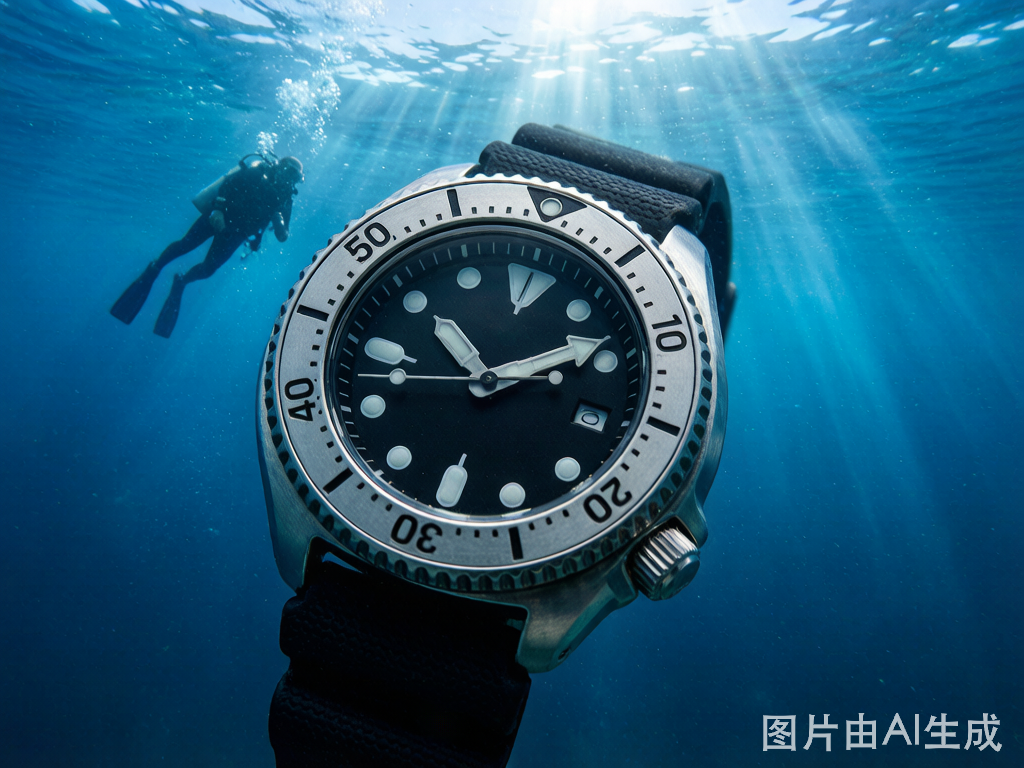
Dive Watches: The Complete 2026 Guide to ISO 6425, Helium Release Valves and Underwater Timepieces
The dive watch is arguably the most iconic and enduring category in all of horology. Born from the demands of underwater exploration, refined by military specification, and elevated to cultural icon status by James Bond and Jacques Cousteau, the dive watch has transcended its tool-watch origins to become a symbol of adventure, capability, and rugged elegance. In 2026, dive watches remain more popular than ever — worn by everyone from saturation divers to office workers who never go deeper than a swimming pool. This comprehensive guide explores every facet of dive watches, from the rigorous ISO 6425 standard to the engineering marvels that keep them ticking hundreds of meters below the surface.
What Makes a Watch a “Dive Watch”?
Not every water-resistant watch is a dive watch. The distinction matters — and it is codified in an international standard. A true dive watch must meet the ISO 6425 standard, which defines specific requirements for water resistance, legibility, bezel functionality, and mechanical integrity under extreme conditions.
The key difference between a water-resistant watch and a certified dive watch is not just depth rating. A dive watch must function as a practical tool underwater — meaning it must be readable in dark, murky conditions, have a timing mechanism (the unidirectional bezel), and survive the pressure changes that occur during ascent and descent. Our waterproof watches guide covers the broader category of water-resistant timepieces, while this guide focuses specifically on purpose-built dive instruments.
The ISO 6425 Standard: What It Requires
The International Organization for Standardization (ISO) 6425 standard, last revised in 2018, establishes the minimum requirements for a watch to be classified as a diver’s watch. Meeting this standard is voluntary, but watches that pass are typically marked with the word “DIVER’S” on the dial. Here are the key requirements:
Water Resistance
The watch must be water-resistant to at least 100 meters (330 feet). However, most serious dive watches are rated to 200 meters or more. The testing involves subjecting the watch to 125% of its rated depth for extended periods.
Time-Preselecting Device (Unidirectional Bezel)
The watch must have a unidirectional rotating bezel with minute graduations for at least 60 minutes. The bezel must rotate counter-clockwise only — this is a critical safety feature. If the bezel is accidentally knocked underwater, it will only move in the direction that shortens the indicated dive time, causing the diver to surface earlier rather than later. This one-way rotation has saved lives.
Legibility in Darkness
The watch must be readable in complete darkness at a distance of 25 cm. This requires luminous material on the hands, the hour markers, and the bezel’s zero marker (typically a triangle at 12 o’clock). Modern dive watches use Super-LumiNova, which can glow for hours after being charged by light exposure.
Running Indicator
The watch must have a way to confirm it is running in darkness. This is typically achieved by making the seconds hand luminous or by adding a lollipop-style luminous tip. If the seconds hand stops, the diver knows the watch has stopped and cannot be trusted for timing.
Magnetic Resistance
The watch must continue to function after exposure to a magnetic field of 4,800 A/m, with accuracy not deviating by more than ±30 seconds per day.
Shock Resistance
The watch must survive a shock equivalent to being dropped from 1 meter onto a hardwood surface without affecting its accuracy or water resistance.
Saltwater Resistance
The watch must survive prolonged exposure to saltwater — typically tested by immersion in a 3% sodium chloride solution for 24 hours at 18-25°C.
The Anatomy of a Dive Watch
The Unidirectional Rotating Bezel
The bezel is the defining feature of a dive watch. To use it, the diver aligns the zero marker (the triangle at 12 o’clock) with the minute hand at the start of the dive. As time passes, the minute hand moves along the bezel scale, showing elapsed dive time at a glance. The bezel typically has markings for every minute in the first 15 minutes (for precise timing of decompression stops) and every 5 minutes thereafter.
Modern bezels come in several materials. Ceramic bezels, like those on the Rolex Submariner and Omega Seamaster, offer superior scratch and fade resistance. For a detailed comparison of case and bezel materials, see our luxury watch materials guide.
The Crown and Caseback
Dive watches feature screw-down crowns and screw-down casebacks to create watertight seals. The crown typically screws into the case with a gasket (O-ring) that compresses to form a seal. This is why you should never operate the crown underwater — unscrewing it breaks the seal and allows water to enter the movement.
The Crystal
Dive watches use sapphire crystal for its exceptional scratch resistance (9 on the Mohs scale, second only to diamond). Some models add an anti-reflective coating to improve underwater legibility. The crystal must be thick enough to withstand pressure at the rated depth — at 300 meters, the pressure on the crystal can exceed 30 atmospheres.
The Dial and Hands
Dive watch dials prioritize legibility above all else. Key design elements include:
- Large, bold hour markers with generous luminous fill
- Distinctive hand shapes — the Mercedes-style hand of the Submariner, the sword hands of the Seamaster, or the arrow hands of the Panerai Luminor
- High-contrast color schemes — black dials with white/cream markers are most common for maximum contrast
- Minimal text to avoid visual clutter
Helium Release Valves: Saturation Diving Explained
For watches rated beyond 300 meters, a helium release valve (HRV) becomes essential. This feature addresses a specific problem encountered in saturation diving — deep-sea diving where divers live in pressurized habitats for extended periods.
At extreme depths, divers breathe gas mixtures containing helium, which has molecules small enough to penetrate the watch’s gaskets over time. During decompression, the helium inside the watch expands faster than it can escape, potentially popping the crystal off the case. The helium release valve allows this trapped gas to escape safely during decompression.
There are two types of HRV:
- Automatic HRV: Opens automatically when the internal pressure exceeds external pressure by a certain threshold. Used by Omega in the Seamaster Planet Ocean.
- Manual HRV: Requires the wearer to unscrew a small valve on the case side before decompression. Used by Rolex in the Sea-Dweller and Deepsea.
For the vast majority of recreational divers (who never go deeper than 40 meters), an HRV is unnecessary. But for commercial saturation divers working at depths of 300+ meters, it is an essential safety feature.
The Best Dive Watches in 2026
Entry-Level Dive Watches (Under $500)
Orient Kamasu / Mako III: Orient offers incredible value in the dive watch category. The Kamasu features a sapphire crystal, 200m water resistance, and an in-house automatic movement — all for under $300. It is arguably the best entry-level mechanical dive watch on the market.
Citizen Promaster Diver: The Eco-Drive Promaster Diver combines solar power with 200m water resistance and ISO 6425 certification. At around $300, it is one of the most affordable ISO-certified dive watches available. The trends in sports watches have made solar-powered dive watches increasingly popular.
Mid-Range Dive Watches ($500–$3,000)
Seiko Prospex SPB143: The Seiko Prospex line represents the sweet spot of dive watch value. The SPB143 features a 200m water resistance rating, Seiko’s 6R35 movement with 70-hour power reserve, and the heritage of Seiko’s legendary 1965 dive watch. At around $600, it is a watch that punches well above its weight.
Tudor Black Bay 58: The Black Bay 58 is perhaps the most beloved dive watch introduced in the past decade. With its 39mm case (perfect for most wrists), 200m water resistance, and the COSC-certified MT5402 movement, it offers 95% of the Submariner experience at roughly half the price. If you are interested in business watches that can also handle weekend dives, the Black Bay is an excellent crossover choice.
High-End Dive Watches ($3,000+)
Rolex Submariner: The watch that started it all. Introduced in 1953, the Submariner is the benchmark against which all other dive watches are measured. The current generation features a 41mm case, the Caliber 3235 movement, and a Cerachrom ceramic bezel. It is as comfortable with a business suit as it is 300 meters underwater.
Omega Seamaster Planet Ocean 6000M Ultra Deep: Omega’s Ultra Deep takes water resistance to extraordinary levels. Rated to 6,000 meters (nearly 20,000 feet), it features a forged titanium case, automatic helium release valve, and the Co-Axial Master Chronometer 8912 movement. It is a testament to what modern engineering can achieve.
Grand Seiko SLGA015 “Black Stream”: Grand Seiko brings Japanese precision to the dive watch category. The Spring Drive 5R65 movement offers ±1 second per day accuracy, while the Zaratsu-polished case and textured dial bring an artistic sensibility that Swiss brands rarely match. For those who appreciate watchmaking artistry, Grand Seiko is in a class of its own.
Dive Watch Movements: Automatic vs. Quartz vs. Solar
While traditional dive watches use mechanical movements, modern options include quartz and solar-powered variants. Each has its advantages:
- Automatic: The traditional choice. No battery needed, works indefinitely with proper maintenance. Requires servicing every 4-5 years. For a deep dive into how these movements work, see our automatic watches guide.
- Quartz: More accurate and lower maintenance than mechanical. Battery changes every 2-3 years. Excellent for backup dive watches that sit in a drawer between dives.
- Solar (Eco-Drive): Combines the accuracy of quartz with the battery-free operation of automatic. The best of both worlds for a practical dive watch. Learn more in our movement types guide.
The Cultural Impact of Dive Watches
James Bond and the Submariner
When Sean Connery wore a Rolex Submariner in Dr. No (1962), he transformed a professional dive instrument into a cultural icon. Bond’s Submariner proved that a tool watch could be worn with a tuxedo, blurring the line between sport and dress watches — a versatility we explore in our classic watches guide.
The Smartwatch Challenge
Dive computers and smartwatches have largely replaced mechanical dive watches as actual diving tools. Yet mechanical dive watches remain popular because they offer something digital devices cannot: heritage, mechanical beauty, and the assurance that they will work regardless of battery life or software glitches. This is part of the broader mechanical watch comeback we have documented.
Caring for Your Dive Watch
Despite their rugged construction, dive watches require proper care to maintain their water resistance and performance:
- Rinse with fresh water after every exposure to saltwater or pool chlorine
- Have water resistance tested annually — gaskets degrade over time, even on watches rated to 1,000 meters
- Never operate the crown or pushers underwater — this breaks the water seal
- Service the movement every 4-5 years — our watch maintenance guide covers this in detail
- Replace the bezel insert if it becomes scratched or faded — ceramic inserts are extremely durable but not indestructible
- Choose the right strap — rubber or NATO straps are ideal for water activities; see our straps guide for options
Dive Watch Sizing and Wearability
Dive watches have trended larger over the past two decades, but 2026 has seen a return to more wearable proportions. The ideal dive watch size depends on your wrist and intended use:
- 37-40mm: Ideal for everyday wear, office-appropriate, fits under a cuff. Examples: Tudor Black Bay 58 (39mm), Rolex Submariner (41mm).
- 41-44mm: The modern sweet spot. Bold presence without being oversized. Examples: Omega Seamaster Diver 300M (42mm), Seiko Prospex “Turtle” (44mm).
- 45mm+: Statement pieces best suited for larger wrists or tool-watch purists. Examples: Panerai Luminor (47mm), Breitling Superocean Heritage (46mm).
Dive Watches as Investments
Certain dive watches have proven to be excellent financial investments. The Rolex Submariner, Omega Seamaster 300, and Tudor Black Bay have all appreciated significantly in recent years. For those interested in wholesale watch purchasing, dive watches from Chinese manufacturers offer excellent value for those looking to build a collection without breaking the bank. The Chinese watch industry has made significant strides in dive watch manufacturing, with brands like Seagull producing respectable mechanical dive watches at accessible prices.
Frequently Asked Questions
Can I swim with a 50m water-resistant watch?
It is not recommended. While 50m watches can handle brief immersion, swimming involves dynamic pressure that can exceed the rating. For regular swimming, choose a watch rated to at least 100m. See our ATM ratings guide for details.
What is the difference between a dive watch and a dive computer?
A dive watch is a mechanical timing device. A dive computer is an electronic instrument that calculates depth, time, nitrogen absorption, and decompression stops. Modern divers use computers for safety, but many still wear a mechanical dive watch as a backup.
Do I need a helium release valve?
Only if you engage in saturation diving at depths beyond 300 meters. For recreational diving (typically 18-40 meters), an HRV is completely unnecessary.
Conclusion
The dive watch represents the pinnacle of purpose-built watch design — a category where every feature serves a practical function, and where form follows function so elegantly that the result becomes beautiful. Whether you are an actual diver who needs a reliable timing instrument or a desk diver who appreciates the engineering and heritage, a quality dive watch is one of the most versatile and satisfying timepieces you can own.
From the affordable Orient Kamasu to the iconic Rolex Submariner, from the 200m recreational standard to the 6,000m Ultra Deep, dive watches continue to push the boundaries of what mechanical timekeeping can achieve. In 2026, they remain as relevant and desirable as ever — not despite the rise of digital alternatives, but because of it. In a world of disposable electronics, a mechanical dive watch that can function at 300 meters and last for generations is a statement of enduring values. Explore our range of wholesale watches to find dive watch options for every budget.
Related Articles
- Waterproof Watches Explained: ATM Ratings & Water Resistance Guide
- Luxury Watch Materials Explained: Stainless Steel, Titanium, Ceramic & Gold
- Automatic Watches: The Complete 2026 Guide
- Watch Care and Maintenance: The Complete 2026 Guide
- Watch Straps and Bands: The Ultimate Guide
- Watch Movement Types Explained
- Classic Watches for Every Occasion
Leave a Reply