
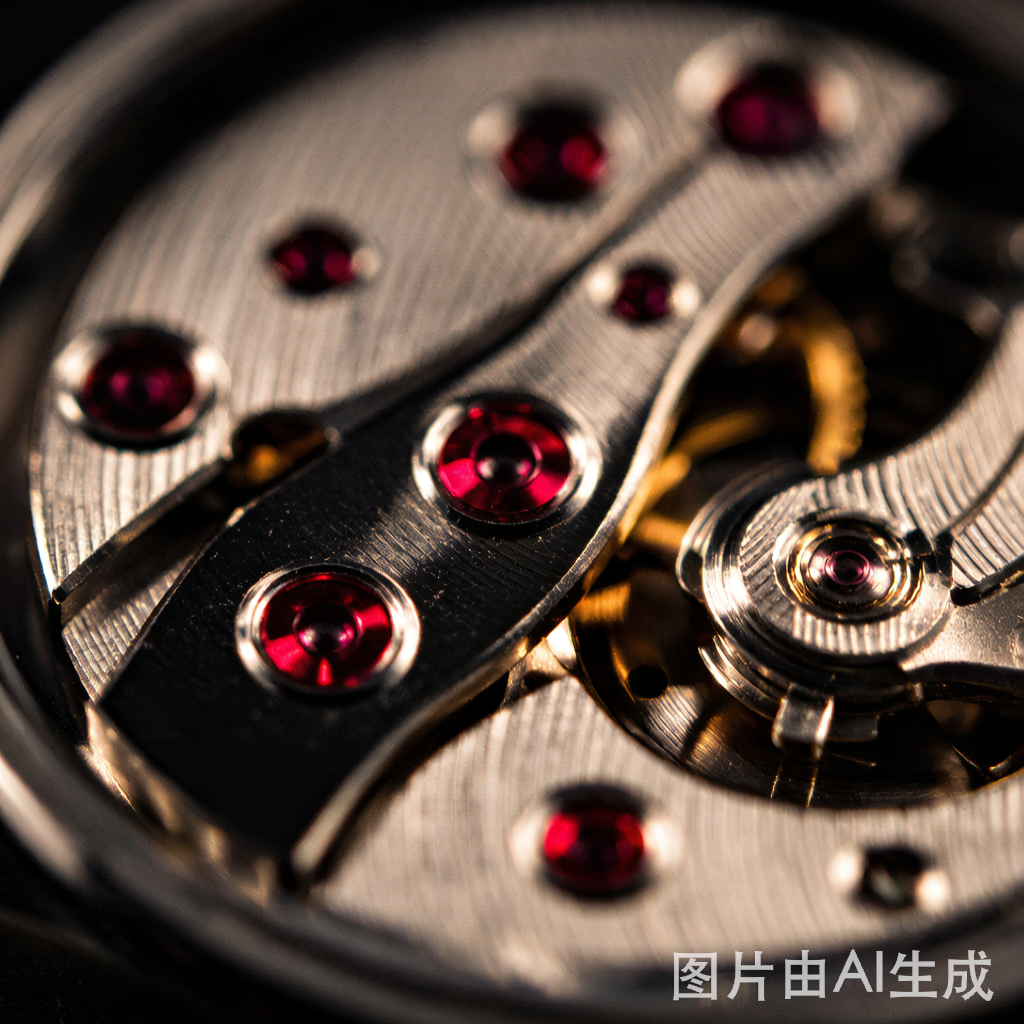
Watch Jewels and Bearings: Synthetic Rubies, Cap Jewels and Jeweled Movements Explained
Inside every mechanical watch, tiny gleaming stones catch the light as gears spin at incredible speeds. These are not decorative gems but functional components known as watch jewels. Made from synthetic ruby or sapphire, these precision bearings reduce friction, minimize wear, and extend the life of mechanical movements. For B2B buyers sourcing custom watches, understanding jewel types and counts is essential for evaluating movement quality. This comprehensive guide explores everything from the history of jeweled bearings to modern manufacturing techniques used by movement manufacturers like ETA, Sellita, and Miyota.
What Are Watch Jewels and Why Are They Used?
Watch jewels are small synthetic ruby or sapphire bearings used in mechanical watch movements to reduce friction at critical contact points. Unlike metal-on-metal contact, which creates excessive friction and wear, jewel bearings provide an ultra-hard, low-friction surface that allows pivots to rotate smoothly with minimal lubrication. The concept of jewel bearings revolutionized horology when Nicolas Fatio de Duillier and Pierre Debaufre pioneered the technique of drilling holes in rubies for watch pivots in 1704.
In modern watchmaking, jewels serve several critical functions. They reduce friction between moving parts, extend the operational lifespan of the movement, provide consistent lubrication reservoirs, and improve timekeeping precision. The number and placement of jewels directly impacts the quality and complexity of a movement, making jewel count a key specification when evaluating movement types for wholesale procurement.
The History of Jeweled Watch Bearings
Early Experiments (1700s)
The use of natural gemstones in watches dates back to the early 18th century. Swiss watchmakers initially used natural rubies and sapphires, but these stones were expensive, inconsistent in quality, and difficult to machine. The breakthrough came when Auguste Verneuil developed the flame-fusion process for growing synthetic corundum in 1902, making jewel bearings affordable and consistent for mass production.
The Synthetic Ruby Revolution
Synthetic ruby became the standard material for watch jewels because it shares the same crystal structure and hardness (9 on the Mohs scale) as natural ruby but can be produced with controlled purity and dimensions. This development democratized jeweled movements, allowing even affordable mechanical watches to benefit from reduced friction. Today, movement decoration and jewel setting are performed with computer-controlled precision.
Types of Watch Jewels
Hole Jewels (Perforated Jewels)
Hole jewels are the most common type, featuring a precisely drilled center hole through which a gear pivot passes. The hole is typically polished to optical clarity to minimize friction. Hole jewels are used on the upper and lower bearings of wheel trains, including the balance wheel pivots, escape wheel, fourth wheel, third wheel, and center wheel.
Cap Jewels (End Stones)
Cap jewels, also called end stones, are flat synthetic ruby discs that sit above hole jewels to provide axial support. The pivot tip rests against the cap jewel, preventing vertical play and reducing end-shake. The tiny space between the pivot tip and cap jewel holds a microscopic droplet of oil, creating a lubricant reservoir. Cap jewels are essential for high-frequency movements operating at 28,800 or 36,000 vph.
Roller Jewels
The roller jewel, or impulse pin, is a small ruby pin mounted on the balance roller that interacts with the pallet fork in the escapement mechanism. This jewel transmits the impulse from the escape wheel to the balance wheel, making it one of the most critical components for accurate timekeeping. The roller jewel must be perfectly positioned to ensure the correct unlocking and impulse timing.
Pallet Jewels (Pallet Stones)
Pallet jewels are two small ruby or sapphire stones set into the pallet fork of a lever escapement. These stones interact with the escape wheel teeth, alternately locking and releasing the wheel. The precise angles of the pallet stones (typically 10-12 degrees for the entry pallet and 12-15 degrees for the exit pallet) determine the efficiency of the escapement and the amplitude of the balance wheel.
Jewel Count and What It Means
The number of jewels in a movement is often advertised as a quality indicator, but more jewels do not always mean better performance. Understanding functional jewel counts helps B2B buyers evaluate movement quality accurately.
17 Jewels: The Standard
A basic mechanical movement typically has 17 functional jewels, covering the essential bearing points: 2 for the balance wheel (plus 2 cap jewels), 2 for the escape wheel, 2 for the fourth wheel, 2 for the third wheel, 2 for the center wheel, 2 pallet stones, 1 roller jewel, and additional jewels for the barrel and keyless works. The ETA 2824-2 and Sellita SW200 both use 25 jewels.
21-25 Jewels: Enhanced Performance
Movements with 21 to 25 jewels add cap jewels to additional wheel trains, reducing end-shake and improving positional accuracy. This jewel count is standard for quality Swiss and Japanese movements used in automatic watches priced for the mid-market segment. The Miyota 9015, a popular Japanese movement, uses 24 jewels.
30+ Jewels: Complications and Cap Jewels
Movements with 30 or more jewels typically include additional complications such as GMT functions, moon phase displays, or chronograph modules. Each additional wheel train requires its own set of jewels. However, some manufacturers add non-functional jewels purely for marketing, so jewel count alone should not be the sole quality indicator.
How Watch Jewels Are Manufactured
Synthetic Ruby Production
Modern watch jewels are made from synthetic ruby grown using the Verneuil flame-fusion process. Alumina powder is melted in a hydrogen-oxygen flame and deposited on a seed crystal, forming a boule (a cylindrical crystal). The boule is then sliced into thin wafers, which are precision-ground and polished into the final jewel shapes. The Incabloc shock protection system uses specially shaped cap jewels that flex under impact.
Precision Drilling and Polishing
The center hole of a hole jewel is drilled using laser technology or ultrasonic machining, then polished to an optical finish using diamond paste. The hole diameter typically ranges from 0.10mm to 0.20mm, depending on the pivot size. The oil-retaining recess (oleophobic recess) is often created around the hole to hold lubricant in place, ensuring the pivot remains lubricated throughout the movement’s service life.
Jewel Materials: Ruby vs Sapphire vs Ceramic
Synthetic Ruby (Red)
Synthetic ruby, colored red by chromium oxide, is the traditional and most common material for watch jewels. The red color makes jewels visually distinctive against the metallic movement, allowing watchmakers to inspect their condition easily. Ruby has excellent hardness (Mohs 9), thermal conductivity, and chemical stability, making it ideal for bearing applications in mechanical movements.
Synthetic Sapphire (Clear)
Clear synthetic sapphire, made from pure alumina without chromium doping, is sometimes used for cap jewels and pallet stones. While functionally identical to ruby, some manufacturers prefer the clear appearance for aesthetic reasons, especially in movements with visible decoration through display case backs.
Advanced Ceramic Alternatives
Some modern movements experiment with ceramic jewel bearings, particularly silicon-based materials. While still rare, these alternatives offer potential advantages in anti-magnetic applications and environments with minimal lubrication. However, traditional synthetic ruby remains the industry standard due to its proven reliability and cost-effectiveness.
The Role of Jewels in Different Movement Types
Manual Winding Movements
Manual winding movements typically have fewer jewels than automatic movements because they lack the automatic winding mechanism. A simple manual movement like the ETA 2801-2 has 17 jewels, covering the essential wheel train and escapement. For B2B buyers sourcing entry-level mechanical watches, 17-jewel movements offer reliable performance at lower cost.
Automatic Movements
Automatic movements require additional jewels for the reversing gears and rotor bearings. The automatic winding system typically adds 5-8 jewels compared to the manual version of the same movement. For example, the ETA 2824-2 automatic has 25 jewels, while its manual counterpart (ETA 2801-2) has 17 jewels.
Chronograph Movements
Chronograph movements require the most jewels due to additional wheel trains for the chronograph mechanism. A typical chronograph movement like the Valjoux 7750 has 25 jewels, while integrated chronograph movements can have 30+ jewels. Each chronograph wheel, coupling clutch, and minute recorder requires its own set of jewel bearings.
Jewel Quality and Its Impact on Watch Performance
Friction Reduction
The primary function of jewel bearings is reducing friction. Steel pivots running in ruby jewels experience approximately 10 times less friction than steel-on-steel contact. This reduced friction improves the power transmission efficiency of the movement, allowing the mainspring to deliver more energy to the balance wheel and maintain a more consistent amplitude.
Lubricant Retention
The oleophobic recess around the jewel hole creates a small reservoir that holds watch oil in place through capillary action. This ensures the pivot remains lubricated between service intervals. Proper lubrication is critical for watch maintenance and extends the time between servicing. Cheap movements without proper oil reservoirs may require more frequent servicing.
Positional Accuracy
Cap jewels reduce end-shake (axial play) in the balance wheel, which is crucial for positional accuracy. A movement with proper cap jewels maintains consistent amplitude in different positions (dial up, dial down, crown up, etc.), which is essential for COSC chronometer certification. The Incabloc system allows the cap jewel to move slightly under shock, protecting the delicate balance pivot.
Jewel Count Marketing vs Functional Reality
Historically, watch manufacturers used jewel count as a marketing tool, sometimes adding non-functional jewels to inflate the number. In the 1950s and 60s, some movements boasted 100+ jewels, most of which served no practical purpose. The Swiss watch industry eventually established standards through organizations like the Federation of the Swiss Watch Industry (FH), discouraging deceptive jewel count marketing.
For B2B buyers, the key is to evaluate functional jewels only. A well-designed 17-jewel movement may outperform a poorly designed 30-jewel movement. When evaluating movement suppliers, request technical documentation that specifies jewel types, positions, and functions rather than relying on total count alone.
Jewel Inspection and Quality Control
Visual Inspection
During quality control inspections, watchmakers examine jewels under magnification for cracks, chips, and contamination. The polished hole should show a uniform reflective surface without visible defects. The oil quantity in each cap jewel reservoir is checked and adjusted during service.
Amplitude Testing
If a jewel is damaged or improperly lubricated, the movement’s amplitude will be reduced. Watchmakers use timing machines to measure amplitude, which should be between 270-320 degrees for a healthy movement. Low amplitude in specific positions may indicate a problem with a particular jewel bearing or escapement component.
Jewel Replacement During Servicing
Watch jewels rarely need replacement under normal conditions due to their extreme hardness and durability. However, they can crack or chip under severe shock, or become contaminated with dried oil. Replacement requires specialized tools including jewel setters and removing tools. When sourcing custom watch movements, ensure the supplier provides access to replacement jewels for after-sales service.
Jewel Bearings in Quartz Movements
While quartz movements have fewer moving parts than mechanical movements, many still use jewel bearings for the gear train and stepper motor. Quality quartz movements like those from Ronda and Miyota typically use 1-5 jewels, compared to the 17+ jewels in mechanical movements. The reduced jewel count reflects fewer moving parts and lower friction requirements.
Cost Considerations for B2B Buyers
Synthetic ruby jewels are relatively inexpensive to produce, so the cost difference between 17-jewel and 25-jewel movements is minimal. The primary cost driver is the labor and precision required for proper installation and lubrication. When evaluating MOQ and pricing for custom watches, specify the minimum jewel count and quality standards required. Movements from reputable manufacturers like ETA and Sellita include properly installed and lubricated jewels as standard.
Future Trends in Watch Jewel Technology
While synthetic ruby has been the standard for over a century, research continues into alternative materials. Silicon-based jewels offer potential for anti-magnetic movements and environments requiring minimal lubrication. Some experimental movements use ball bearings instead of jewel bearings for the automatic rotor, though jewel bearings remain preferred for wheel trains due to their superior friction characteristics.
The integration of jewels with shock absorption systems continues to evolve, with modern systems like KIF and Etashoc offering improved protection for balance pivots while maintaining the precision of traditional cap jewel configurations.
Related Articles
- Watch Movement Manufacturers Guide: ETA, Sellita, Miyota, Ronda and Seiko
- Watch Shock Absorption Systems: Incabloc, KIF, Etashoc and Diashock
- Watch Escapement Types: Lever, Co-Axial, Detent and Free Escapements
- Watch Movement Decoration Techniques
- Watch Frequency and Beat Rate Guide
- Watch Quality Control Standards
Understanding watch jewels and bearings is fundamental for B2B buyers sourcing quality mechanical watches. While jewel count alone does not guarantee quality, properly placed and lubricated synthetic ruby bearings are essential for movement longevity, accuracy, and performance. When specifying requirements for custom watch manufacturing, work with experienced suppliers who understand the technical nuances of jewel bearing selection and installation.
Leave a Reply