
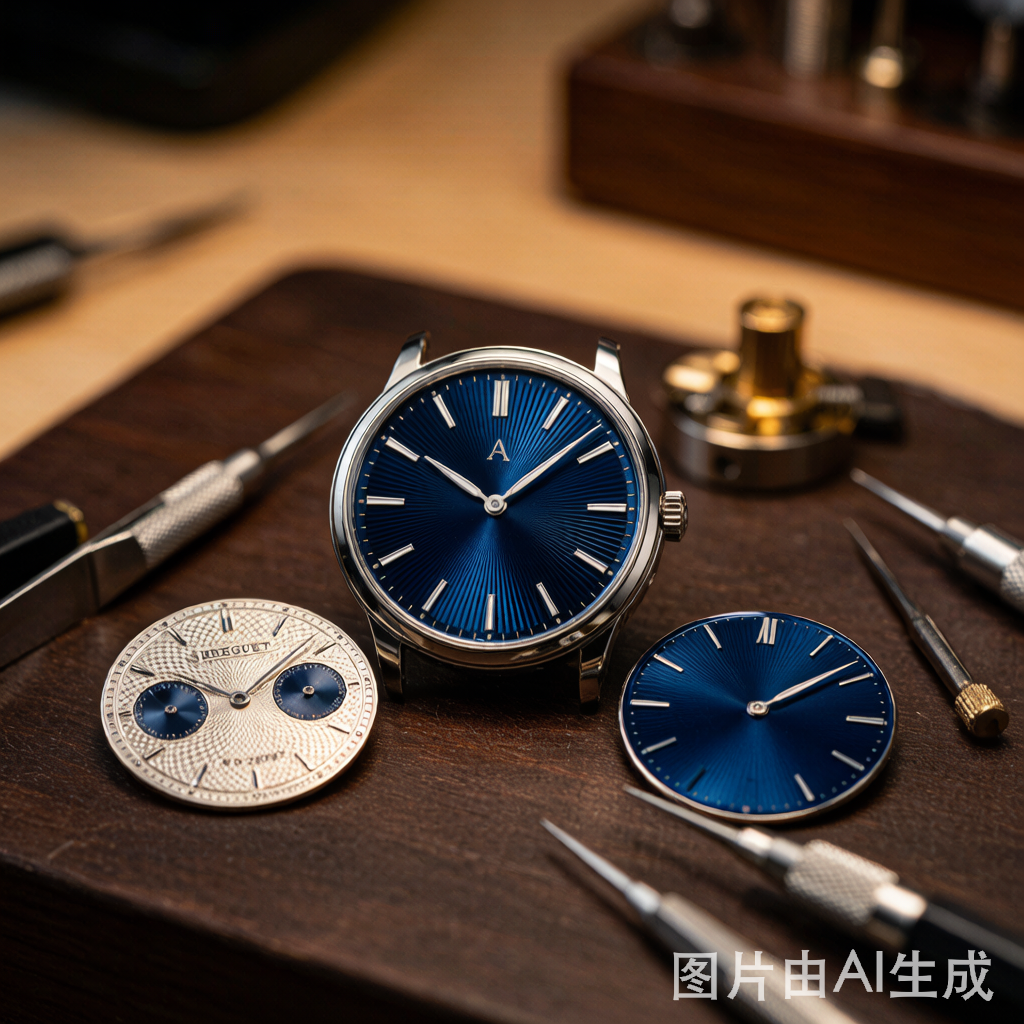
Watch Dial Manufacturing Techniques: Guilloche, Enamel, Lacquer and Sunburst Finishes Explained
The watch dial is the face of a timepiece, the first element that captures attention and communicates brand identity. Behind every beautiful dial lies a complex manufacturing process that combines traditional craftsmanship with precision engineering. For watch wholesalers, private label brands, and OEM manufacturers, understanding dial manufacturing techniques is essential for specifying product quality, evaluating supplier capabilities, and communicating value to customers.
This comprehensive guide explores every major watch dial manufacturing technique, from the centuries-old art of guilloche to modern laser engraving and photolithography. Whether you are developing custom watch designs or evaluating dial suppliers for your private label collection, this knowledge will help you make informed decisions that elevate your product offering.
The Anatomy of a Watch Dial
Before diving into manufacturing techniques, it is important to understand the layered structure of a typical watch dial. The Wikipedia article on watch dials provides a useful overview, but for B2B buyers, the key components include the base material, surface decoration, applied markers, printing, and protective coating.
The base material provides structural integrity and affects the overall weight and acoustic properties of the dial. Surface decoration creates the visual character that distinguishes one dial from another. Applied markers and hands provide functionality, while printing adds brand logos, numerals, and track markings. Each layer must be precisely executed to achieve a professional result.
Dial Base Materials
The most common dial base materials are:
- Brass: The industry standard, offering excellent machinability and affordability. Brass dials are typically plated with silver, gold, or rhodium before decoration.
- Silver: Premium material used in haute horlogerie, offering natural warmth and patina development over time.
- Mother-of-pearl: Natural mollusk shell material creating iridescent effects, popular in ladies’ watches and luxury products.
- Stone: Rare stones like lapis lazuli, malachite, or onyx create distinctive natural patterns.
- Carbon fiber: Modern material for sports watches, offering lightweight and distinctive weave patterns.
When specifying watch materials for custom projects, the dial base material should align with the overall product positioning and target price point.
Guilloche: The Art of Engine Turning
Guilloche is a decorative technique that creates intricate, repeating geometric patterns on a dial surface using a rose engine lathe or straight-line engine. The patterns, which include circular waves, straight lines, basket weave, and sunburst variations, are cut directly into the metal base, creating light-reflecting grooves that produce a shimmering, three-dimensional effect.
True guilloche is performed mechanically, with the operator guiding a cutting tool across the rotating or moving dial blank. Each pattern requires a specific machine configuration, and the skill of the operator determines the quality and consistency of the result. According to the Wikipedia article on guilloche, this technique dates back to the 16th century and was perfected in the 18th century for decorative arts.
For B2B buyers, guilloche dials command premium pricing and are typically reserved for high-end products. When evaluating private label watch projects, specifying genuine hand-guilloche dials versus stamped or laser-etched imitations is critical, as the visual difference is subtle but the cost difference is substantial.
Guilloche Pattern Types
- Clous de Paris: Square pyramid pattern resembling hobnailing, the most iconic guilloche design
- Tapisserie: Concentric square pattern used famously by Audemars Piguet in the Royal Oak
- Sunburst: Radiating lines from center, creating dynamic light reflection
- Barleycorn: Grain-like pattern resembling wheat ears
- Wave pattern: Concentric circles creating ripple effects
Enamel Dial Techniques
Enamel dials represent the pinnacle of dial craftsmanship, created by fusing powdered glass to a metal base at temperatures exceeding 800 degrees Celsius. The result is a surface of extraordinary depth, luminosity, and permanence that does not fade or degrade over time. Enamel techniques include several distinct processes:
Grand Feu Enamel
Grand feu enamel, meaning “great fire” in French, involves applying multiple layers of enamel powder to a copper or gold base, each layer fired in a kiln at 800-900 degrees Celsius. The process is repeated up to ten times, with each firing risk of cracking, bubbling, or color shift. The rejection rate for grand feu enamel dials can exceed 50 percent, making them expensive but unmatched in visual quality.
For custom watch manufacturing, grand feu enamel is typically reserved for limited edition or ultra-premium products. The Wikipedia article on vitreous enamel provides additional technical background on the firing process.
Champleve Enamel
Champleve technique involves carving recesses into a metal dial base and filling them with enamel, which is then fired and polished flat. The metal borders between enamel cells create a patterned design. This technique is less common than grand feu but offers distinctive two-tone visual effects.
Cloisonne Enamel
Cloisonne enamel uses thin gold or silver wires to create compartments on the dial surface, which are then filled with different colored enamels. This technique enables detailed pictorial designs and is often used for map dials, portrait dials, and artistic limited editions.
Lacquer Dial Finishes
Lacquer is applied as a liquid coating that dries to a hard, durable finish. Unlike enamel, lacquer does not require firing and can be applied at room temperature, making it more cost-effective while still producing beautiful results.
Urushi lacquer, a traditional Japanese technique using sap from the Toxicodendron vernicifluum tree, produces exceptionally deep, warm finishes that are impossible to replicate with synthetic materials. Urushi lacquer dials are labor-intensive, requiring months of drying time between coats, and are typically reserved for the finest products.
For mid-range products, synthetic lacquer finishes provide excellent visual quality at a fraction of the cost of enamel or Urushi lacquer. When evaluating MOQ and pricing for dial suppliers, synthetic lacquer is the standard offering for colored dials.
Sunburst and Radial Brushing
Sunburst finishes create radiating lines from the center of the dial outward, producing a dynamic light effect that shifts as the watch moves. This technique is applied using a rotating brush that contacts the dial surface at varying angles, creating fine grooves that reflect light differently depending on viewing angle.
Sunburst dials are extremely popular across all price tiers, from affordable wholesale watches to luxury timepieces. The technique is cost-effective and creates visual interest without the expense of guilloche or enamel. When sourcing from Chinese watch manufacturers, sunburst finishes are standard options available at minimal additional cost.
Color Application on Sunburst Dials
Sunburst dials are typically colored using physical vapor deposition (PVD) or electroplating processes. PVD enables a wider range of colors, including blue, green, purple, and black, with excellent color consistency and durability. The combination of sunburst texture and PVD coloring creates the characteristic shimmering effect that makes these dials so appealing.
Matte and Texture Finishes
Matte dial finishes provide a non-reflective surface that maximizes legibility under all lighting conditions. Sandblasted matte finishes create a fine, uniform texture, while chemical etching produces a softer matte appearance. Matte dials are standard for military-style and tool watches where legibility is paramount.
Textured finishes include a variety of techniques that create tactile and visual interest:
- Sand texture: Fine granular surface resembling sandpaper
- Vertical brushing: Linear brushed finish running top to bottom
- Horizontal brushing: Linear brushed finish running side to side
- Tropical texture: Organic pattern inspired by tropical foliage
- Honeycomb: Hexagonal pattern creating a modern, technical appearance
These textured finishes are increasingly popular in 2026 watch trends and can differentiate products in competitive markets.
Applied Markers and Index Manufacturing
Hour markers are applied to the dial surface using several techniques:
Painted Markers
Painted markers are the most cost-effective option, applied using pad printing or screen printing. While affordable, painted markers lack the three-dimensional quality of applied markers and are typically used on entry-level products.
Applied Markers
Applied markers are separately manufactured metal indices attached to the dial surface using adhesive or pins. They provide three-dimensional depth and can be polished, brushed, or gem-set. Applied markers are standard for mid-range to premium products and significantly enhance perceived quality.
Faceted and Multi-Component Markers
Premium products may use faceted markers with multiple polished surfaces that create complex light reflections. Multi-component markers combine different materials or finishes, such as polished steel with luminescent material inserts.
Dial Printing Techniques
Logos, numerals, and track markings are applied to dials using several printing techniques:
Tampography (Pad Printing)
Pad printing uses a silicone pad to transfer ink from an etched plate to the dial surface. This technique is versatile and cost-effective, capable of printing fine details and multiple colors. It is the standard printing method for most watch dials.
Silk Screen Printing
Silk screen printing forces ink through a mesh screen onto the dial, creating thicker ink deposits than pad printing. This technique is preferred for large areas of solid color and produces a more tactile, raised texture.
Photochemical Etching
Photochemical etching uses photolithography to create extremely fine patterns and markings on metal dials. This technique enables detail levels impossible with conventional printing and is used for fine scale markings on chronograph dials and other precision instruments.
Lume Application on Dials
Photoluminescent material, commonly called lume, is applied to dial markers and hands to provide visibility in darkness. The application technique affects both brightness and longevity of the luminescent effect:
Painted lume: Lume mixed with binder and painted onto markers. Most common and cost-effective method.
Applied lume inserts: Solid lume material cut to shape and inserted into recessed markers. Provides brighter, longer-lasting glow.
Lume-filled markers: Tubular markers filled with loose lume powder, creating maximum brightness. Used in premium dive watches.
For waterproof dive watches, lume quality is a critical specification that directly affects functionality. Request lume brightness and duration test data from suppliers when establishing quality control standards.
Quality Control for Watch Dials
Dial quality control is particularly challenging because visual defects that are invisible on individual components become obvious when assembled into a complete watch. Key QC criteria for watch dials include:
- Color consistency: Uniform color across the dial surface and between production batches
- Marker alignment: Precise positioning of applied markers with correct spacing and rotation
- Printing clarity: Sharp, clean edges on printed elements with no bleeding or ghosting
- Surface defects: No scratches, fingerprints, dust inclusions, or plating imperfections
- Lume application: Even lume coverage with consistent brightness and color
- Flatness: Dial must be perfectly flat to ensure proper hand clearance
For B2B buyers, requesting sample dials under magnification before placing production orders is essential. Chinese watch manufacturers have significantly improved dial quality in recent years, but quality consistency between batches remains a common challenge that requires active management.
Custom Dial Development Process
Developing custom dials for private label products requires close collaboration with the dial manufacturer. The typical process includes:
- Design specification: Providing detailed drawings including colors, markers, printing, and finishing requirements
- Prototype development: Manufacturer produces sample dials for approval, typically taking 2-4 weeks
- Color matching: Iterative process to match specified colors, often requiring multiple rounds
- Production tooling: Creating production tooling for pad printing plates, marker molds, and other components
- Pre-production samples: Final approval samples from production tooling before mass production
- Mass production: Production run with in-process quality control
The entire custom dial development process typically takes 8-12 weeks and requires minimum order quantities that vary by technique. For private label watch brands, dial customization is often the most time-consuming and expensive aspect of product development, but also provides the greatest opportunity for brand differentiation.
Cost Factors in Dial Manufacturing
Dial costs vary enormously based on technique and complexity:
- Standard sunburst with printed markers: $2-5 per dial
- Sunburst with applied markers: $5-15 per dial
- Guilloche with applied markers: $15-50 per dial
- Grand feu enamel: $50-200+ per dial
- Custom cloisonne enamel: $200-1000+ per dial
These cost ranges are approximate and vary significantly based on order quantity, supplier location, and design complexity. When calculating MOQ and pricing structures, dial cost is often the second most expensive component after the movement.
Conclusion
Watch dial manufacturing is a complex intersection of art, engineering, and industrial processes. Understanding the techniques available and their cost implications enables B2B buyers to make informed decisions that balance quality, cost, and brand positioning. From cost-effective sunburst finishes to artisanal grand feu enamel, each technique offers distinct advantages for specific market segments.
As consumer expectations for dial quality continue to rise, manufacturers who invest in dial craftsmanship will differentiate themselves in increasingly competitive markets. By specifying the right combination of base material, surface decoration, markers, and printing techniques, you can create dials that elevate your watch products from commodities to sought-after timepieces.
Related Articles
- Watch Design Customization Process
- Watch Materials Guide
- Custom Watch Manufacturing Guide
- Private Label Watches Guide
- Watch Quality Control Standards
- Watch Customization MOQ and Pricing
- Watch Luminescence Technology
- Watch Crystal Types Guide
- Movement Decoration Techniques
- Skeleton Watches Guide
- Wholesale Watches from China Guide
- Shenzhen Watch Manufacturing Hub
- China Watch Technology Revolution
- 2026 Watch Trends
- Chronograph Watches Guide
- Dive Watches Guide
- GMT Watches Guide
- Moon Phase Watches Guide
- Waterproof Watches Explained
- Couple Watches Gift Guide